The 10-day test flight will see the team fly around the Moon and back on a 685,000-mile journey.
Nasa’s first manned mission to the Moon in more than 50 years that will take its crew deeper into space than anyone has gone before is “ready to go”, according to space agency chiefs.
Four astronauts – three US and one Canadian – are due to blast off aboard the 322-foot rocket from Cape Canaveral in Florida on Wednesday, if weather conditions hold and barring any last-minute hitches.
The 10-day test flight will see the team fly around the Moon and back on a mammoth 685,000-mile journey.
During the so-called lunar flyby, the Orion spacecraft will travel around 4,700 miles beyond the far side of Earth’s natural satellite, setting a new record.
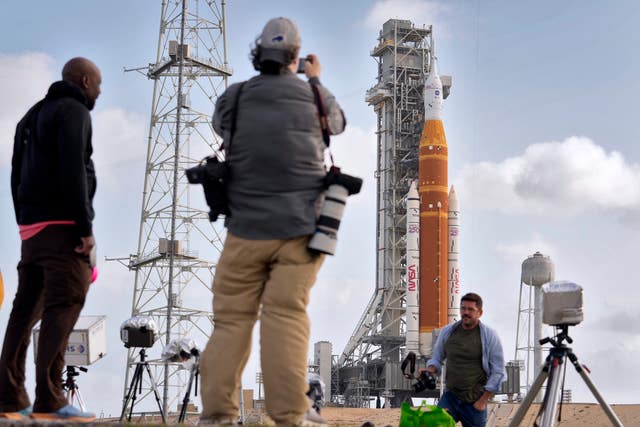
While the astronauts will not touchdown on the Moon, the Artemis II mission paves the way for a future lunar landing within the next couple of years.
The UK is playing a part in the mission, with the Goonhilly Earth Station, near Helston, Cornwall, helping to track the capsule on its epic celestial voyage.
Speaking at a news conference at Florida’s Kennedy Space Centre, Nasa associate administrator Amit Kshatriya said: “As we enter the pre-launch phase, the teams are in a strong posture, and the mission remains on track.”
He added: “The vehicle is ready. The system is ready. The crew is ready.”
He went on: “I have complete confidence in this team of the Nasa workforce. For everybody else, 53 years ago humanity left the Moon and did not return. Now we go back.”
Artemis launch director Charlie Blackwell-Thompson said the countdown to launch started at 4.44pm local time on Monday.
She added: “It is an exciting time. It’s an exciting time for this team and our crew and really our nation and the world.
“All indications are right now we’re in excellent, excellent shape as we get into count.”
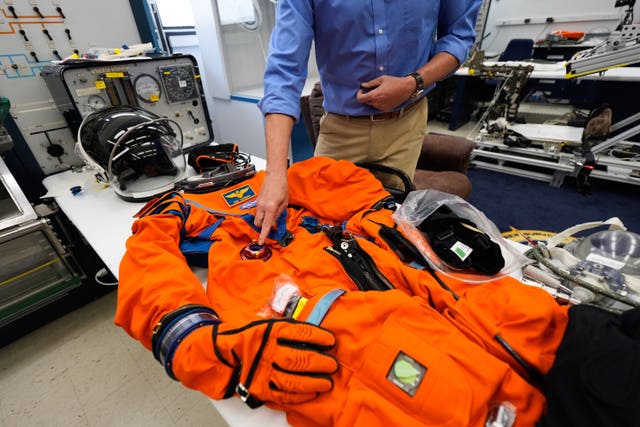
Nasa chief flight director Emily Nelson said: “Our teams in mission control and our crew members have been spent the last two years dedicated to training for this particular mission, developing all of the products associated with this flight, and they are ready to go.
“The opportunity is immense for us to finally get the opportunity to send our crew farther than anyone’s gone before.”
The mission previously had to be postponed by two months due to hydrogen fuel leaks and clogged helium lines.
The last time Nasa sent astronauts to the Moon was during Apollo 17 in 1972.
The new Artemis programme aims for a two-person landing in 2028.