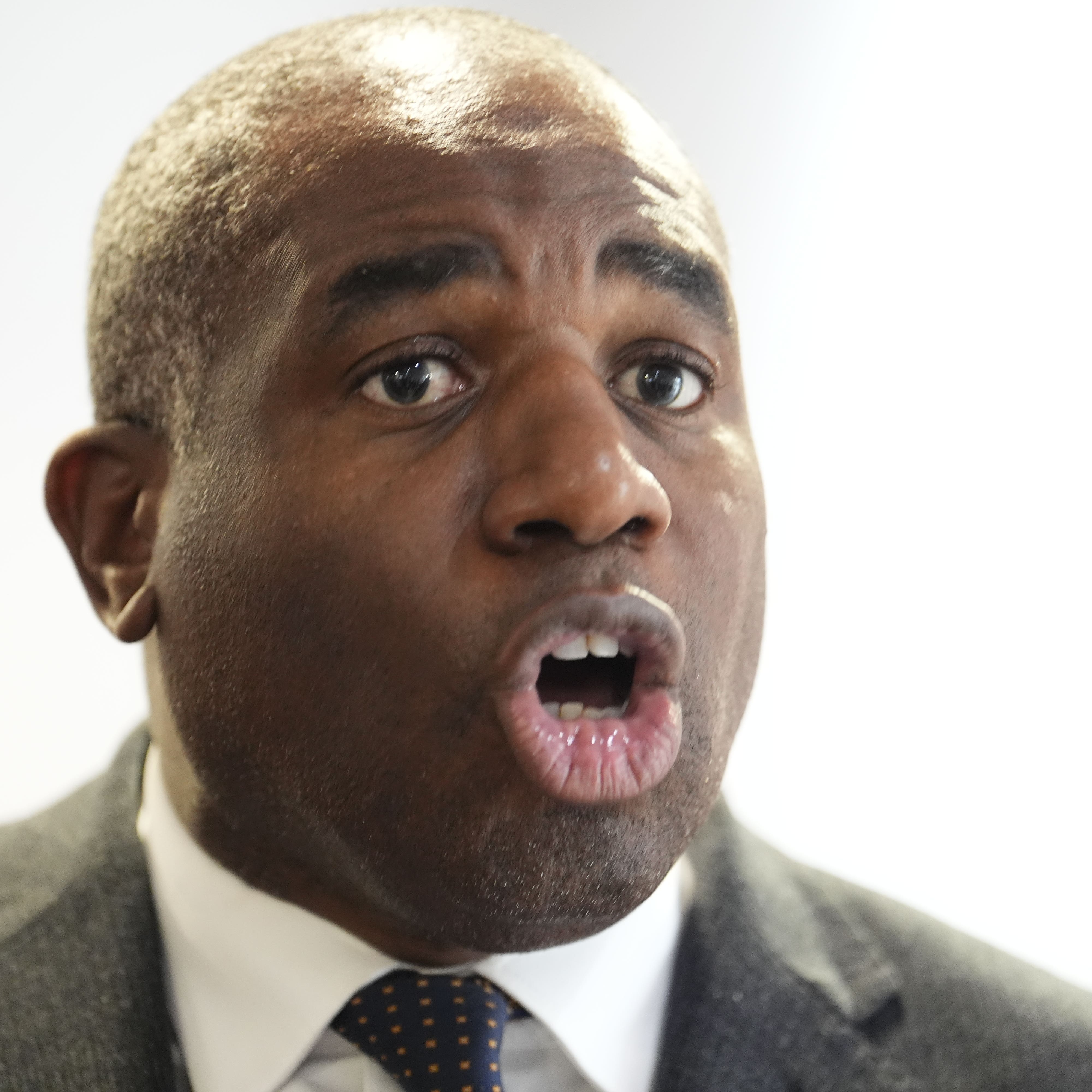
The responsibility for the design, build and running of it will be within Government, according to Darren Jones.
The creation of the Government’s digital ID will be done in-house and not outsourced to a private firm, the Chief Secretary to the Prime Minister has said.
Darren Jones said “the responsibility for the design, build and running” of the scheme will be “within Government”.
It comes amid concerns about the role Palantir is playing in key state services, with critics opposing a deal for the American tech giant to provide a data platform for the NHS and a three-year £421 million contract signed with the Ministry of Defence last year to continue providing services such as data integration, analytics and AI platforms.
Mr Jones gave a demonstration of a prototype of “Government by app” underpinned by digital ID at a Downing Street press conference on Tuesday.
He said: “A big question people ask is, who is going to build this? And the answer is, we are.
“This system is a piece of sovereign technology capability and the responsibility for the design, build and running of it will be within government with the support of the Government Digital Service.
“It will not be outsourced to a private company.
“Data relating to the digital ID will always be stored in line with standard government practice, just like how your passport or national insurance data is stored today.
“There will also not be one new single central database of all of this information in the centre of government, it will remain situated where it is. For instance, data about your benefits entitlement will stay with the Department for Work and Pensions. Your driving data will stay with DVLA (Driver and Vehicle Licensing Agency), your tax data with HMRC (HM Revenue and Customs).”

Mr Jones originally signalled wide-reaching ambitions to make the digital ID scheme the “bedrock of the modern state”, making it mandatory for right-to-work checks.
But after the proposals’ popularity plummeted, they appeared to be watered down and made voluntary.
Mr Jones said digital ID “will become the front door to how you access public services” and will cut costs to the taxpayer.
Pointing to current inefficiencies, he said the DVLA currently processed 45,000 letters each day, the Department for Environment, Food and Rural Affairs used 500 different paper forms, and HMRC handled more than 100,000 phone calls a day.
“Driving those efficiencies will be critical to making public services more affordable for the taxpayer in the long-term,” he said, noting that it could lead to future tax cuts as it saved “tens of billions of pounds” currently spent on “unproductive call centres, lots of paper shuffling, slow processes”.
The NHS app and health data will remain separate from the scheme, the minister said, as that already “works reasonably well” and its development could be slowed down through alignment, and “people rightly want their health data often treated differently to their ‘paying the tax disc for their car’ data”.
☕ Can you get your admin done faster than you can make a cup of tea?
I want to make government by app a reality. That’s what we could do with digital ID.
Have your say by searching ‘digital ID consultation’. pic.twitter.com/6XptTrt7Rn
— Darren Jones MP (@darrenpjones) March 10, 2026
All other Government services with a “customer-facing interaction” could be included in the digital ID app, according to Mr Jones.
Additions like childcare, pension statements and HMRC data are a “prize for the next parliament”, Mr Jones said, adding that each new service on the app would be likely to require approval from Parliament.
He told reporters: “We’ll introduce a Bill later this year, but I expect to build in a mechanism that means that Government and any future government will have to go back to Parliament for a check and balance, and approval for each service that comes onto the app in the future.”
An eight-week consultation has been launched to seek the public’s views, which will be followed by a “people’s panel” of 100-120 Britons, as part of efforts to go “beyond” the usual process amid scepticism within Labour and the wider public about the scheme.

The Government aims to make digital ID available for the over-16s but is seeking views on lowering the minimum age to 13 or removing it so even babies can have it.
Mr Jones suggested the system could lead to future tax cuts as it saves “tens of billions of pounds”, but was unable to say how much the rollout would cost as he faced questions about the scheme at a press conference on Tuesday.
“Tens of billions of pounds a year that is currently going on very unproductive call centres, lots of paper shuffling, slow processes,” he said.
“If we can just automate that and make it more digital, you free up taxpayers’ money, either to go on other priorities like the front line in the NHS, or quite frankly to give it back to taxpayers in the years ahead, because we’ve made public services cheaper to run.”
Mr Jones insisted that the rollout would start off with users providing very limited data, but that later down the line more information could be handed over on an optional basis.
The consultation warns that a national digital ID will be targeted by “fraudsters, scammers and misinformation campaigns” and says that “to ensure the success and integrity of the digital ID system, we know it is essential to anticipate and mitigate the risks”.
It is understood that officials hope to start making progress this year, with the app running by the end of the parliament.