A long-range attack on a joint UK-US military base in the Indian Ocean has fuelled concern over the potential threat posed to Britain itself.
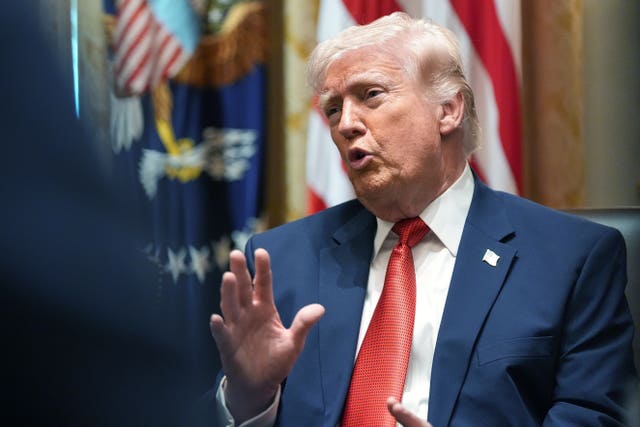
US defence secretary Pete Hegseth has suggested that Iran has the capability to strike London as he stressed the global threat posed by Tehran.
His comments at a White House cabinet meeting came after two missiles were fired last Friday at the joint UK-US military base on the island of Diego Garcia in the Indian Ocean, around 4,000km (2,500 miles) from Iran.
While the UK Government has said both fell short of their target, it has fuelled concern over the potential threat posed to Britain itself.
The Israeli military has previously claimed Iranian missiles could reach a distance of around 4,000km, posing a danger to dozens of countries in Europe, Asia and Africa.
Although not mentioning Diego Garcia by name, Mr Hegseth said: “Two days ago they (Iran) shot two failed missiles on a target 4,000km away. For years, they told the world that their missiles could only range two (thousand) kilometres. Surprise. Yet again, Iran lie.”
He added: “And to the world. I say London is 4,000km from Iran. Washington DC is 3,300km from Venezuela, another country President Trump did something about, partnered for a long time with Iran.
“So you’re telling us that Iran is not a threat to the world or to the US, President Trump knows better.”
Earlier, his British counterpart John Healey refused to say if Iran was able to hit the UK, but insisted military chiefs did not believe Tehran had any plans to do so.
Pressed repeatedly on Sky News whether missiles fired by Tehran could reach London, he said: “We have no assessment of Iranian plans to strike London.”
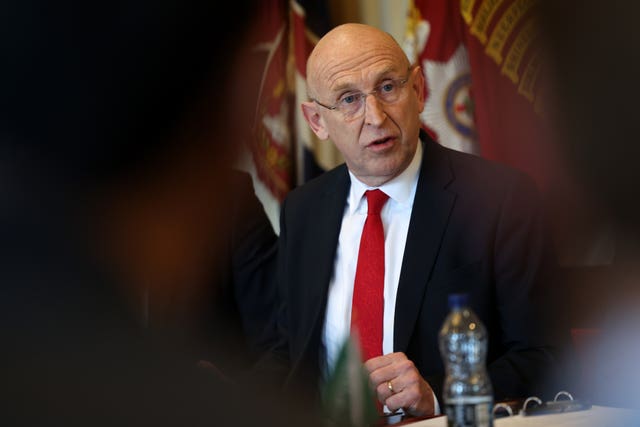
He added: “What I’m saying, and trying to reassure people, is that we’ve got no assessment that Iran has any plans to attack.
“But we have the resources, we have the alliance in place, to be able to defend Britain, and we do that with allies, and we do that with Nato.
“As far as Iran goes, they’re demonstrating a capacity to hit across the Middle East, we see the same tactics and technologies that we see employed by Russia in Ukraine, and this is the hidden hand of (President Vladimir) Putin in both conflicts.”
Meanwhile, neither side shows any sign of backing down in the Middle East war as the US continues to build up its combat forces in the region and Iran maintains its stranglehold on the Strait of Hormuz, a major oil and gas shipping route.
Mr Trump’s envoy Steve Witkoff confirmed the US has presented a 15-point “action list” to Iran, delivered through Pakistan as a basis for a possible peace deal, but the president made clear he was not pushing for an agreement.
He said: “They’re begging to make a deal, not me.
“They are negotiating, by the way, and they want to make a deal so badly, but they’re afraid to say it because they figure they’ll be killed by their own people.”
However, Iran’s foreign minister Abbas Araghchi said in an interview on state TV that his government has not engaged in talks to end the war, “and we do not plan on any negotiations”.