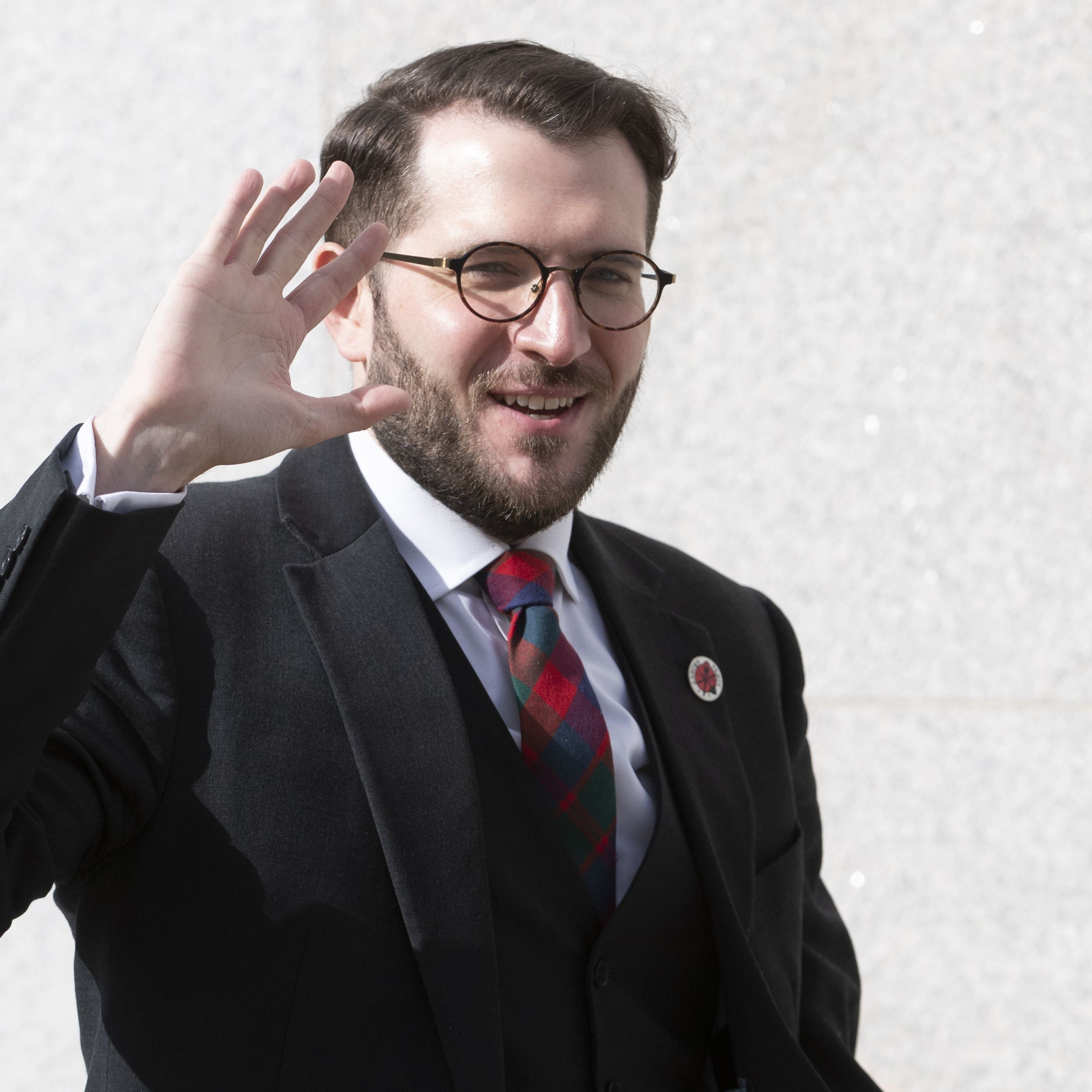
Sir Sajid Javid was speaking at the launch of a new research project asking people for their views on what unites the country.
Britain risks being “torn apart by our differences”, Sir Sajid Javid warned, as he urged members of the public to share their vision for a united country.
The former Tory home secretary said the UK was in “real peril” and more common ground must be found across communities.
Sir Sajid was speaking at the launch of a wide-ranging new research project, dubbed the “national conversation”, which is seeking to gather opinion from Britons about cohesion in their neighbourhood and the wider country.

Participants are asked to fill in a survey and also invited to share a 60-second voice note at the end, summing up their thoughts, which will then be analysed using AI by researchers at Oxford University seeking to map out what steps could be taken to bring people together.
The project is part of the work of the Independent Commission on Community and Cohesion, a cross-party group set up in the wake of the 2024 summer riots and co-chaired by the ex-Conservative minister and former Labour MP Jon Cruddas.
It comes after dozens of arrests were made as tens of thousands of people attended two major protests in central London this weekend.
The Unite the Kingdom rally organised by far-right activist Tommy Robinson and the pro-Palestine Nakba Day rally both took place on Saturday amid a huge £4.5 million police operation.
Speaking to the Press Association on Friday, Sir Sajid said the commission wanted to hear from everyone, including those who attended protests, about what concerned them most, and hoped millions would take part in the survey.
Asked if he was concerned after more than 100,000 people attended the previous protest led by Robinson, real name Stephen Yaxley-Lennon, he said: “I’m concerned because I think Tommy Robinson is someone outside the mainstream of politics, on the one hand – he’s an extremist in many ways.

“But if we judge by what happened the last time he wanted to do a march, there were many people there, and we’ve got to understand why people are turning up to these marches, what is concerning them most, and that’s what I think this national conversation can really help with, because it doesn’t matter who you are, whether you’re on a march or not on a march, anyone in any community can take part.”
Sir Sajid also said political leaders have a responsibility to “lessen tensions” and avoid “divisive” rhetoric.
Asked whether political leaders across the spectrum should be doing more on this front, he said: “I think everyone would want to see their political leaders being responsible and being mindful that sometimes the language they use can be divisive, and it can be this sort of excuse an extremist or someone is looking for to tip them over the edge.
“And if we want a reminder of that again, let’s look at what sadly happened in Golders Green, where a community was attacked, where someone was trying to murder people simply because they were Jewish.
“That’s one example of a community that we have in Britain that is frightened. No (child) should have to go to school with security guards, right? That is not the kind of society that anyone wants to live in, and I think all politicians have a responsibility to lessen tensions.”
While serving as communities secretary under Theresa May, Sir Sajid oversaw a green paper that sought to act on some of the recommendations of a review by Baroness Louise Casey, which aimed to boost community integration through initiatives like improving English language skills.

But he told PA that shortly after Baroness Casey’s report came out, Westminster became “consumed by the aftermath of the Brexit vote” and “the whole thing got lost”.
“That report landed soon after the Brexit vote, and as we can probably remember, Westminster got consumed in the aftermath of the Brexit vote, and there were lots of policy changes and lots of even prime minister changes, and the whole thing got lost.
“It was actually welcomed in Parliament across the House and supported by many politicians, and that was great to see.”
He said the work of the commission was to bring together people from all political backgrounds and question what can be done to unite the UK.
Sir Sajid, who is British-Asian and has written about his own experiences of racism while growing up in the UK in the 1970s, said it had been “a lot less welcoming to new arrivals” and the country was now, “despite our problems, the most successful multiracial democracy on earth”.
But he warned both Islamophobia and antisemitism are on the rise, adding: “That is equally unacceptable, and these are the kinds of hatreds that I think would speak for most people in this country, just want to see less of.”

Asked about the tone of the current political discourse on religion, particularly after recent debate over public prayer, Sir Sajid declined to comment on specific issues but said politicians should “reflect” before they post on social media.
Tory shadow justice secretary Nick Timothy faced a backlash earlier this year after describing prayer at a public Iftar event in Trafalgar Square as an “act of domination and division” in a post on X.
Sir Sajid, who is a Muslim, said: “I don’t want to get involved in any sort of current political issue.
“But I will say, and I found this myself when I was in Parliament, when I was a minister, is that you sometimes have to be very careful what you think and how people might react, and sometimes it’s just better to reflect on something before you go and tweet or open your mouth.”
Polling by the British Red Cross suggests that three quarters of British adults (75%) believe the country is divided, with 72% seeing more division than there was five years ago.
Only half of those surveyed felt comfortable discussing divisive topics like immigration, politics and global conflicts with their own partner.
The results of the national conversation will help inform a series of recommendations for measures to build social cohesion in a report expected from the commission later this year.
Announcing the launch, Sir Sajid said: “Our country is in real peril. Unless we can regain a shared sense of what unites us – of what we have in common – we risk being torn apart by our differences.
“That vision won’t come from politicians – it can only come from the public. So please take a few minutes out of your day to add your voice to the national conversation.”
Although not officially Government-sponsored, the commission is understood to have been supported by the Ministry of Housing, Communities and Local Government.
In previous evidence sessions, it has heard from experts across a range of sectors as well as figures including former prime ministers Rishi Sunak and Lord David Cameron, former Tory cabinet minister Lord Michael Gove and former deputy prime minister Sir Nick Clegg.
Co-chairman Mr Cruddas said: “Rebuilding Britain’s social fabric and sense of community has never been more urgent. But the answers to this don’t lie in Westminster. They lie in communities up and down the country.”
Playwright and screenwriter James Graham, who advised on the design of the national conversation, said: “As we all know, our society can feel very divided right now, and in a political climate that often seeks to divide us into narrower tribes that incite tensions through difference, rather than unite us around our positives and strengths.
“It’s also the case that the louder voices are the ones which tend to reach above the noise.
“So here is a genuine, real attempt to correct that.”
The national conversation runs from Monday to the end of August and the commission is inviting people to take part in the survey at https://www.thenationalconversation.org.uk/ .