Britons including Alexander Browder and The i Paper journalist Richard Holmes have been banned from entering Russia.
Yvette Cooper condemned Russian sanctions on British media and a 17-year-old schoolboy as “desperate” and “appalling” and said the Government would be stepping up its own measures against Moscow.
Britons including Alexander Browder, a teenager who has conducted research into alleged Moscow-backed cryptocurrency laundering, and The i Paper journalist Richard Holmes have been banned from entering the country.
The Foreign Secretary said the Government would “keep building” on its own sanctions targeting Russia as she hit out at the “assault on media freedom”.
She told the Press Association: “I think we’ve seen increasing reckless and desperate escalation from Russia because Ukraine is doing better on the battlefield and keeping them under pressure, but we’ve seen these appalling attacks on civilians by Russia.
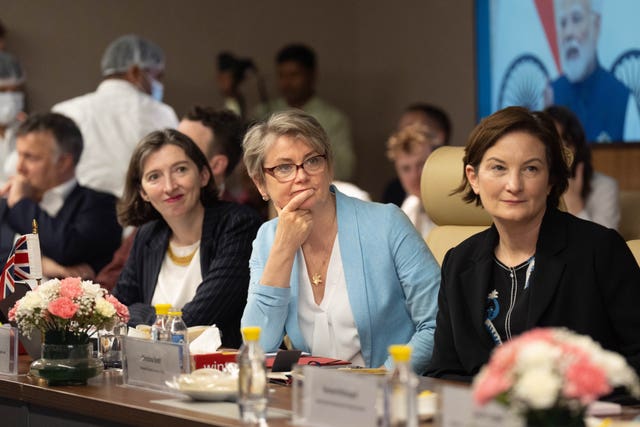
“And to sanction journalists – this is an assault on media freedom and just tells you everything you need to know about the oppression of the Russian regime. I just think it is desperate and wrong to sanction a 17-year-old, I just think it is appalling.”
Sir Keir Starmer’s Government is facing a backlash over its decision to water down plans for a ban on UK imports of diesel and jet fuel made from Russian oil in third countries.
Instead, some new sanctions will now be “phased in” while a trade licence permits the imports “indefinitely” after fuel prices soared amid supply disruption sparked by the Iran war.
Asked whether that move sent the wrong message in light of Moscow’s announcement of fresh measures against Britons, Ms Cooper said the Labour administration wanted to increase sanctions “at every stage”.
“We’re actually continually increasing our sanctions and we’ve introduced not just the new roll-out of sanctions including targeting refined oil for the first time, we’ve also since then had another round of sanctions on crypto-currencies and we’re going to keep going further,” she said.
“At every stage we’re going to keep building on the sanctions. In some areas those sanctions are being rolled out, they’re being phased in – which we’ve done in the past before but we’re going to keep increasing the sanctions on Russia because we see this as hugely important to keep the economic pressure up on Russia.”
Russia’s foreign ministry announced the sanctions on Tuesday, targeting Alexander – the son of prominent Kremlin critic Sir Bill Browder – security correspondent Mr Holmes, Washington Post journalist Catherine Belton, and two figures linked to the Chelsea Group conglomerate, chairman Richard Nicholas Westbury and Alice Mary Laugher with entry bans.

In a statement, it claimed the measures had been taken in response to “provocative anti-Russian rhetoric of British officials, the spread of insinuations about Russia, and London’s practical steps to supply the Kyiv regime with weapons”.
The UK has sanctioned more than 3,000 Russian people, entities and ships since Moscow’s full-scale invasion of Ukraine in February 2022.
Alexander said he was “not bothered at all” and would wear the sanction as a “badge of honour”.
“It shows me that I touched a nerve – I am looking in the right places. Russia can add my name to whatever list they want – it won’t change the facts, it won’t change my work and the pressure that we need to put them under,” he told the Telegraph.
Mr Holmes said: “The sanctions placed against me and others this week are just the latest in a long line of measures against Western journalists who are simply doing their jobs.
“These actions highlight how Russia’s war is being fought in the information space as well as on the battlefields in Ukraine.
“At The i Paper we always seek to scrutinise the activity of governments in an independent, fair, and objective way.”
Oliver Duff, editor-in-chief at the paper, said sanctions on reporters “don’t change our commitment to holding powerful states to account.”
“We will continue to report without fear or favour,” he said.