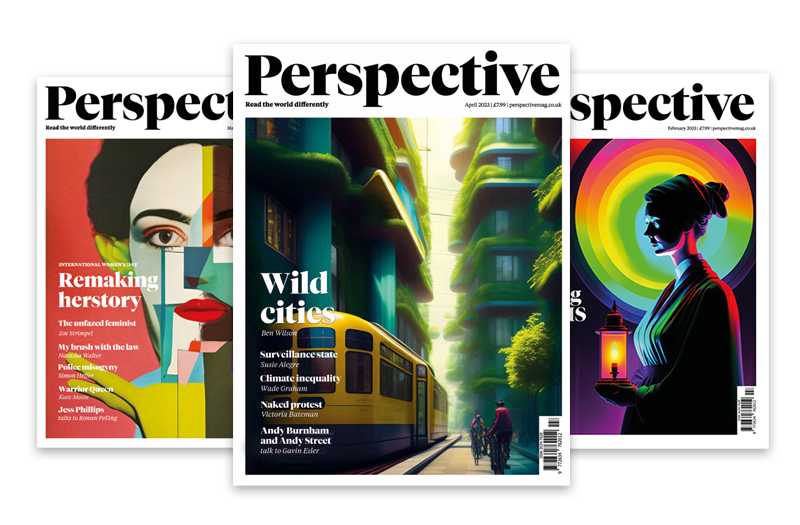
How do you celebrate International Women’s Day if the word “woman” is being erased and eroded? As a writer on women’s health, I have found myself front and centre of attempts to change the definition of “woman”. It first came to my attention around 2019 that there was a drive to change terminology and either use replacement terms such as “birthing people”, “cervix owners”, “menstruators” and “bleeders”; or to remove women from the language by using woollier phrases such as “expectant parents” and “breastfeeding families”. When I politely questioned these changes, I was brutally attacked on social media, called a transphobic bigot and deplatformed from speaking events. Despite the fact I’d written two bestselling books about childbirth and led a global “Positive Birth Movement” for nearly a decade, I became persona non grata. People were instructed to throw my books in the bin.
Although this was extremely traumatic and damaging, it had the side effect of making me very interested in what was driving these language changes and why they matter. I’d been told they were being done in the name of “inclusivity”, but my own understanding of being inclusive – a policy of actively elevating, promoting and giving opportunities to those with disadvantage – did not match what I was seeing. Women-only categories in sport, for example, were created to promote the inclusion of females, who had historically been completely held back from competition. Male people, on the other hand, had always had the advantage, the opportunities, the sponsorship, the encouragement – to say nothing of the fact that, in most cases, they are physically faster and stronger. So how did allowing people who had been born male – no matter how they now identified – into the women’s category, count as inclusive? It was – and still is – destroying sporting opportunities for those with a disadvantage. Women.
This year, the demand for inclusivity has been baked into the central aims of International Women’s Day – which is being promoted with the general theme of “Inspire Inclusion”. But for several years now IWD itself has interpreted “inclusion” as a widening of the definition of women to include men – with all the advantage that growing up male in a patriarchy has conferred upon them. Last year Hershey’s Canadian operation chose a trans woman – born male – to promote a new chocolate bar, while Joe Biden gave a trans woman an International Women of Courage award. As the 2024 global day to celebrate women (and flag up where we still face inequality and oppression) approaches, women are asking if we can just have one day that’s only for people born female.
Why are men not being described as “ejaculators” and “prostate owners”?
Writing about this sometimes creates a bad feeling in me. Not only have I been socialised as a woman to “be kind”, a codified way of telling women to think of others before themselves at all times, but I also genuinely want a world in which all people, no matter how they identify or present, feel respected and included. Of course trans people should get advertising contracts and win awards and be celebrated. But should we be doing this on International Women’s Day, the one day of the year when the focus is supposed to be on elevating a category of humans with a long history of oppression – females? The problem is that by changing the definition of women to include men, we begin to erode the ability not just to celebrate women, but to protect their rights. As a feminist, I have to put women first. I want to “be kind” to my own kind.
The destruction of women’s hard-won rights translates across all areas if you redefine “woman” to include men. It’s not just sport. Women-only awards, grants, hospital wards, shortlists, prisons and refuges are affected too. None of these can be easily protected if “woman” becomes an open category that anyone can identify into at will. Historically, much less health research has been done into the female body – the male has been the default subject. Now, just as that was beginning to be addressed, the data is becoming harder to collect, record and analyse because “woman” doesn’t really mean a female person anymore. This affects more than just the vital area of health: how will we fight the “gender pay gap”, for example, if sex categories become meaningless?
People send me dozens of examples of the erasure of women from language each week and I now painstakingly document them on my substack. One question I am frequently asked is, why is this not happening to men’s language? Why are men not being described as “ejaculators” and “prostate owners”? And the answer is simple: because this is a men’s rights movement. Some people born male wish to be free not just to dress as women, or to call themselves women, but to forcefully insert themselves into the definition of the word itself, and literally be women. However, the messy reality of female biology is a frustrating barrier to that aim. Therefore, the entire language of women’s health needs to be “desexed”, uncoupling periods, pregnancy and even menopause from womanhood completely, and thus making it easier for the central mantra “trans women are women” to be true.
The levels of male entitlement at play are staggering, but they are needed to maintain the illusion that sex doesn’t matter. Imagine standing on the number one podium in a women’s sporting competition and taking the trophy – and this has now happened many times – if you are a fully intact male? Forgive me, but this takes balls, yet it’s all made so much easier each time someone claims that the word “woman” means something other than a human female adult. Events like International Women’s Day, set up to celebrate female people, are instead used as a vehicle to redefine us and, in doing so, assert male dominance. Until this changes, women should refuse to participate.
Milli Hill is a writer and non-fiction author on women’s health. Find her at millihill.substack.com