In her evidence, former MSP Liz Smith said some patients allegedly had the wrong parts of their bodies removed by the disgraced surgeon.
Patients of disgraced brain surgeon Sam Eljamel were left with “horrific” disabilities following his operations, a former MSP has told an inquiry.
On its first day of evidential hearings, the Eljamel Inquiry was told some patients allegedly had the wrong parts of their bodies removed.
Mr Eljamel was a consultant neurosurgeon at Ninewells Hospital in Dundee from 1995 until his suspension in December 2013.
A public inquiry is taking place after patients of Mr Eljamel raised concerns that he had harmed as many as 200 people.
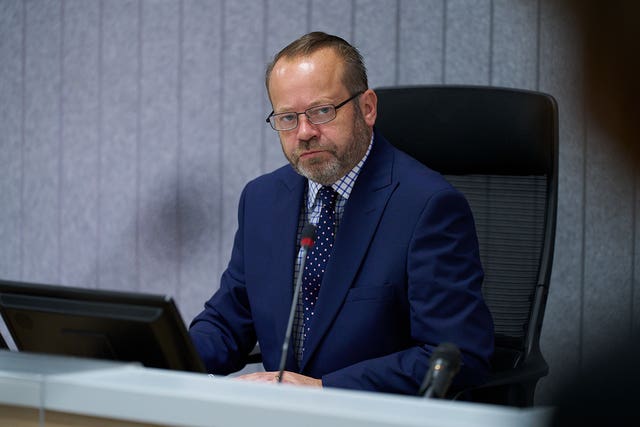
The first day of proceedings began in Edinburgh on Tuesday with an opening address from Jamie Dawson KC, the inquiry’s senior counsel.
This was followed by evidence from the former Conservative MSP for Mid Scotland Fife Liz Smith, who represented patients affected by Mr Eljamel’s practice.
She said testimony from her constituents had “upset me greatly” and many had asked “why on Earth this was allowed to happen”.
Ms Smith said she had looked into why Mr Eljamel had been allowed to continue practising despite “deep-seated concerns” being raised about him at earlier stages.
She said that as she spoke to patients and their families, she found the situation was more widespread than initially thought.
“I realised this was not an event on its own, there were other patients involved in what became a dreadful scandal,” Ms Smith told the inquiry.
She also criticised the record-keeping around Mr Eljamel’s medical practice, saying: “It’s absolutely appalling about some of the things that were happening and the lack of accurate medical notes that they (patients) had a right to be able to see.”
Ms Smith continued: “There are allegations that the wrong body parts were removed, and the physical disabilities – well they’re with the patients for the rest of their lives as we know.
“Some of these disabilities are quite horrific. People have lost their mobility, people have lost their means of looking after themselves.”
Speaking ahead of her evidence session, Ms Smith said the hearings have been a “long time coming”.
She told the Press Association: “Those patients, who are here just now, have had to suffer for such a long time, and they’re wanting answers.
“They want to know who’s responsible and why certain things happened, and why nobody has yet been held accountable.
“As a former parliamentarian, (my colleagues and I) have been asking questions about this scandal for a very long period of time and not perceiving the answers that patients absolutely deserve to have.”
Former patient Jules Rose, who led the campaign for a public inquiry, said it has been a “long, arduous and emotional journey” to reach this moment, as the inquiry finally got under way.
“I’m here with my fellow campaigners, some of whom have campaigned for 10 years to get this public inquiry, so that we can get to the bottom of why NHS Tayside allowed and enabled Eljamel to commit the harm on innocent patients for 18 years,” she said.
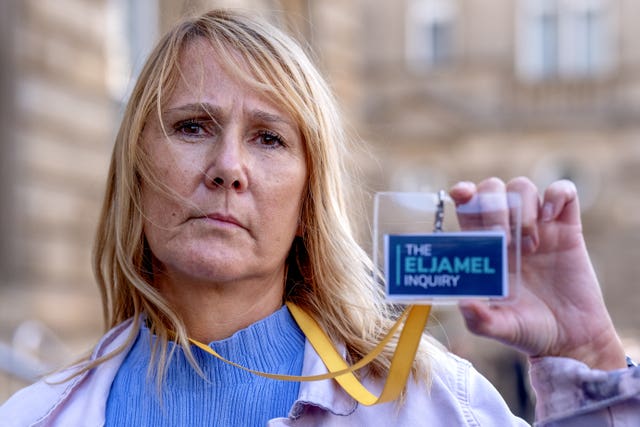
“He was committing harm with life-changing injuries on patients – why did NHS Tayside allow that? Why did they not intervene and stop this monstrous man? We want to get to the bottom of it. We want answers.
“What we’re expecting from this is we want to see real change and a real time change as and when the damning evidence is unfolded.”
In his opening address on Tuesday, Mr Dawson said the inquiry had reached a “significant milestone”.
During the first phase, which will last four weeks, Mr Dawson said the inquiry will hear from a wide range of witnesses including representatives of NHS Tayside, the Scottish Government, the University of Dundee, and regulatory or professional bodies.
Phase two, which is due to begin in December, was expected to focus on evidence of former patients of Mr Eljamel and from independent clinical reviews (ICR).
However, Mr Dawson said some of the planned ICR evidence will now need to be pushed back as a result of delays.
The inquiry heard more than 110 patients have had their clinical cases referred to an ICR by the inquiry.
However, the inquiry has so far only received one neurological assessment, despite the fact this was due to be heard as evidence in December.

“It is unrealistic to think that reviews will be advanced in sufficient numbers and to a level which would merit consideration at hearings as soon as December,” Mr Dawson said.
“The result is a necessary change of plan for December and beyond, the main goals of which are to try to make what progress we can and to seek to maintain stability for patients.
“Accordingly, the intention is that the December hearings will involve patient and possibly patient representative evidence only.”
An additional solicitor has been funded to try and speed up this work.
The inquiry, taking place before Lord Weir, continues.