Looking back at the life of the author and pioneer of smallpox inoculation

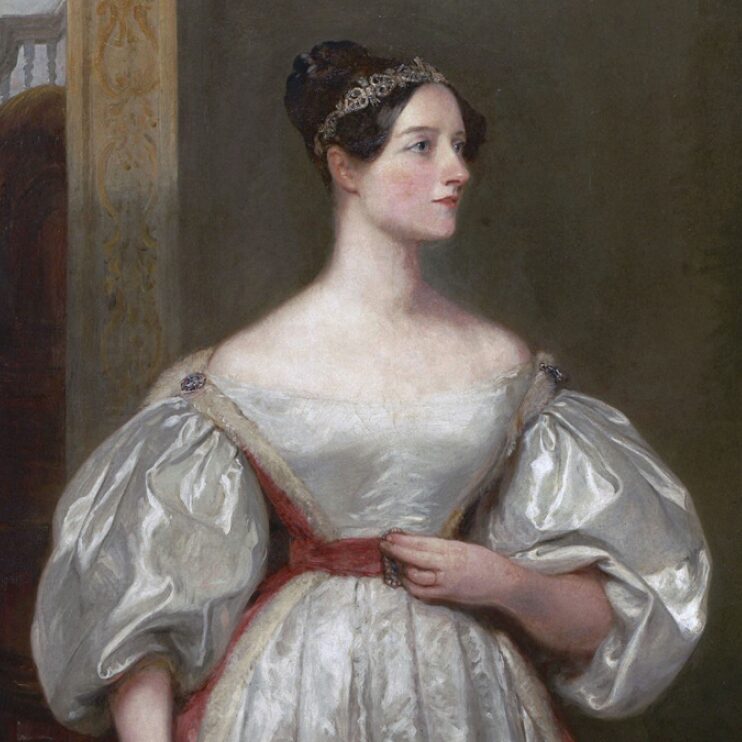
Ada Lovelace
Ada Lovelace, the 19th century genius who conceptualised the modern computer
At her birth in 1689, Lady Mary Wortley Montagu seemed to unite all the best blessings of existence. She was handsome, aristocratic, rich and clever. Her only misfortune was to be born into a world in which a woman’s beauty, rank and wealth were for others to dispose of, and which had no use for female brains at all. Despite this she lived to become one of the most brilliant writers and travellers of her age, and a pioneering advocate of the smallpox vaccine.
Her talents, together with a singular independence of mind, were evident from an early age. At fourteen, she became so obsessed with Ovid’s Metamorphoses that she taught herself Latin, hiding from her governess in a cupboard with a dictionary, sometimes for up to ten hours at a stretch. Later, when the time came for her to be married off, she rejected her father’s choice of suitor – the extravagantly named Clotworthy Skeffington – and eloped with another man.
Her choice was a curious one. Edward Wortley Montagu, who turned out to be something of a clot himself, was a cold fish. The first, and possibly only, truly exciting action of his life – his elopement – seems to have been a complete aberration. He muffed it completely the first time round by turning up late, leaving his inamorata alone and shivering on the appointed balcony until she was discovered and bundled off to the country in the family’s carriage.
But Edward did have two advantages. He was very well connected in the literary world, so early on in their marriage Lady Mary became acquainted with a coterie of writers, including, most notably, Alexander Pope. Soon she was writing her own satirical verse, and even collaborating (albeit anonymously) with her new friend. Then, in in 1716, Edward was appointed British Ambassador to Turkey.
Lady Mary had almost died of smallpox and her face remained disfigured
Lady Mary’s letters home during their two-year sojourn, painstakingly edited and redacted over more than four decades, would become the classic travel memoir we know today as The Turkish Embassy Letters. From the very first she was entranced by all things Ottoman. Everything she saw “was like a fresh scene from an opera, every day”. She wrote astutely about the enormous political power wielded by the janissaries, about Islam (which fascinated her), about gardens (this was the Tulip Age), buildings, mosques, food and clothes.
Her most memorable observations, however, are about Turkish women. Narratives about the Orient and its mysteriously segregated females were already numerous by the early eighteenth century, but unlike her predecessors, Lady Mary wrote about women from her own lived experience. In Sophia, she visited a hammam, in which she sat fascinated and fully dressed among a group of women who were, she wrote, “all being in a state of nature, that is, in plain English, stark naked.” She only resisted their invitations to strip off herself by opening her shirt and showing them her stays, “which satisfied them very well, for I saw they believed I was so locked up in that machine, that it was not in my own power to open it, which contrivance they attributed to my husband.”
Unlike other commentators, she saw advantages to wearing the veil, a practice she believed gave Turkish women more liberty rather than less; she also wrote admiringly (and perhaps enviously) of their financial autonomy. “Upon the whole,” she noted, “I look upon the Turkish women as the only free people in the empire.’’
It was in Turkey that Lady Mary came across the practice of “engrafting” small children against smallpox, describing how her friends “make parties for this purpose”. An old woman would arrive “with a nutshell full of the matter of the best sort of smallpox, and asks what veins you please to have opened. She immediately rips open that you offer to her with a large needle (which gives no more pain than a common scratch) and puts into the vein as much venom as can lie upon the head of her needle, and after binds up the little wound with a hollow bit of shell.”
After a short fever, lasting perhaps two or three days, the children all recovered. “There is no example of anyone that has died of it, and you may believe I am well satisfied of the safety of the experiment, since I intend to try it on my dear little son.”


To subject her only son and heir to this procedure was an extraordinary act. To any English person, smallpox was both terrifying and deadly. Just three years previously, Lady Mary herself had almost died of it and her face remained permanently disfigured. (“She was very full [of pox], but not pitted [ie pitied]” ran a typically cruel squib of the day.) When her little boy duly recovered, she vowed to bring “this useful invention into fashion in England”.
Her chance came sooner than expected. In 1721, when the Wortleys were back in England (Edward having muffed again and been ignominiously recalled from his post) a particularly virulent smallpox epidemic engulfed London. To spread the word about the efficacy of the “engrafting method” she’d learned in Constantinople, Lady Mary declared she would publicly vaccinate her daughter, then aged three, with several “learned physicians” as witnesses. The following year Princess Caroline, the Princess of Wales, followed her example, vaccinating two of her own children.
If the medical establishment had been given the chance to reflect soberly on the procedure, things might have played out differently. As it was, a vicious media war ensued, with “vaxxers” and “anti-vaxxers” divided along more or less party lines after the Royal Family, and therefore the Whigs, were seen to be in favour, which meant the Tory opposition papers came out against it. The debate quickly took on violently racist and misogynist tones. It was unthinkable, raged one eminent medical man, that “an Experiment… practised only by a few Ignorant Women, amongst an illiterate and unthinking People,” should be inflicted on “one of the Politest Nations in the World.”
This entirely imaginary politesse did not of course extend to Lady Mary herself, who was both praised and vilified in equal measure, and not only in the press. People on the streets of London were openly disrespectful and taught “to hoot at her as an unnatural mother.”
The “progressives” eventually won the day, but the publicity, so toxic to a woman’s reputation, took its toll. The damage was compounded when, some years later, she fell out spectacularly with Alexander Pope. The reasons for this remain obscure. Lady Mary’s family always believed that when Pope made a pass at her she had laughed openly in his face (perhaps because the poet was only 4’ 6” tall after suffering tuberculosis of the spine). Whatever the truth of the story, Pope’s subsequent trolling of his former friend was sustained, vicious, and, once again, ruinously public. He lambasted her as promiscuous, dirty, and unnatural. She was “furious Sappho”, a “Flagrant Whore”, “Lewd Lesbia” and “a sage dame, experienced in her trade”.
Lady Mary and her friends hit back (A Popp upon Pope was the title of one pamphlet) but the damage could not be undone. By now separated from Edward, she spent most of the last twenty years of her life living on the continent, only returning to England just before her death in 1762.
Mary Wortley Montagu is one of the great women of the eighteenth century. Her Turkish Embassy Letters remains one of the finest travel books ever written. If I can be allowed a final piece of personal solidarity, it is this: I have no fewer than three modern editions of her Letters on my bookshelves, but just who, I wonder, outside the musty confines of Eng Lit departments, still reads Pope?
“The Turkish Embassy Letters”
by Mary Wortley Montagu (Eland)
Katie Hickman is the author of ten books; her latest non-fiction work is “Brave Hearted: the Dramatic Story of Women of the American West” (Virago)

Your email address will not be published. The views expressed in the comments below are not those of Perspective. We encourage healthy debate, but racist, misogynistic, homophobic and other types of hateful comments will not be published.