The sculpture was created to help Nairn Floors promote its products in the 1970s.
26 December 2022
A miniature elephant created by renowned sculptor Sir Eduardo Paolozzi to help a company boost its linoleum sales is to go on display following restoration.
The limited edition artwork was produced by Paolozzi in the early 1970s for Fife-based Nairn Floors to help promote its products.
It has recently undergone restoration which included reattaching its disconnected trunk, and it will go on display next month at Kirkcaldy Galleries, close to the factory that commissioned the piece.
The elephant-shaped case, which is 30cm high and has a detachable back, was produced to hold leaflets and promotional material at tradeshows and in showrooms.
Lily Barnes, linoleum curator at OnFife, which runs Kirkcaldy Galleries, said: “Nairn needed a way to display brochures that was tidy, eye-catching and chic enough to capture the imagination of architects, who it was hoped would then be more likely to use the company’s floors in their designs.
“The elephants – while strange and unusual to us – were inspiring to Paolozzi.
“They introduced him to new techniques which he would later use in his own work.”
Although 3,000 of the elephants were eventually produced in 1972, only a few of them are accounted for.
One is in the Metropolitan Museum in New York, another is in the Victoria and Albert Museum in London, and two are held by the cultural charity OnFife.
The recently-restored moulded plastic sculpture – thought to be a prototype model – will be displayed next to its companion at Kirkcaldy Galleries during January and February.

Nairn Floors was at something of a crossroads in 1970 when Paolozzi was approached, having survived the tumultuous 1960s when consumer tastes changed and linoleum sales dipped.
As the company diversified it looked to consolidate its position by advertising its products to architects, coveted clients who could generate bigger sales than the company could secure from individual customers flooring their homes.
Company chiefs who were keen to market the firm as modern, exciting and innovative thought an elephant would symbolise Nairn’s qualities of strength, intelligence and durability.
Paolozzi, considered one of the pioneers of Pop Art, was recommended for the commission by a design company called Douglas Maxwell Limited, which was aware of the artist’s fascination for industrial objects.
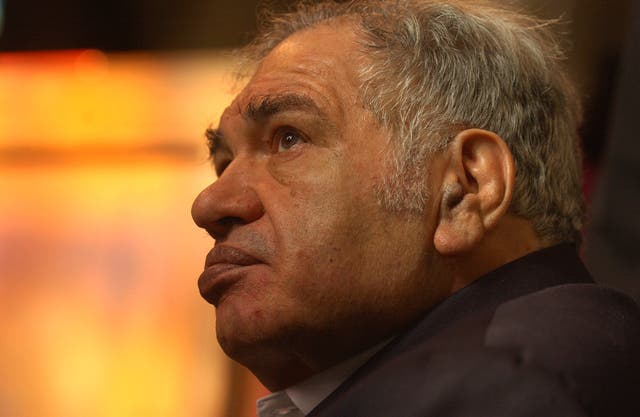
He had recently received an OBE and was renowned in the art world, having held one-man shows at the Museum of Modern Art in New York, and the Tate Gallery in London.
The Edinburgh-born artist, who died in 2005, said of the commission: “The object was exciting to me as a sculptor.
“I was aware beforehand of the various technical processes the sculpture would have to undergo… and this opened an entirely new world to me.”
To create the elephants, Paolozzi first produced a maquette – or model – which pattern makers, moulders and a plastics engineer developed into a final design.
Each elephant came with a booklet detailing the process, which was described as “very complex”.
Both elephant sculptures are also expected to feature in the Flooring the World exhibition, which opens at Kirkcaldy Galleries next October and is part of a two-year project exploring the history of the Fife linoleum industry.
It is funded by the Esmee Fairbairn Collections Fund, which is run by the Museums Association.