The Scottish Parliament has voted for Westminster to transfer powers to Holyrood to allow a second independence referendum to be held.
John Swinney is to press the Prime Minister for a second independence referendum after MSPs backed his call for Westminster to grant Holyrood the powers for such a vote to take place.
The Scottish First Minister, who is due to meet Sir Keir Starmer for talks in June, said those talks would be “an opportunity for me to progress the will of Parliament”.
He spoke out after MSPs backed, by 72 votes to 55, a motion demanding Westminster deliver a Section 30 order to transfer powers to Scotland that would allow a second referendum.
However, Downing Street immediately rejected that call, with a spokesperson making clear that “the UK Government does not support independence or another referendum”.
The spokesperson said: “People need and want their governments focused on the issues that really matter — economic growth, the cost of living, and public services. Our focus must be on delivery, not division.
“The Scottish Government has work to do using the powers that it has to get the basics right from the ferry network to our NHS and helping people with the cost of living.
“Ahead of 2014 there was agreement across all parties, across civic society in Scotland and across the Scottish and UK parliaments that there should be a referendum. There is no such consensus now.”
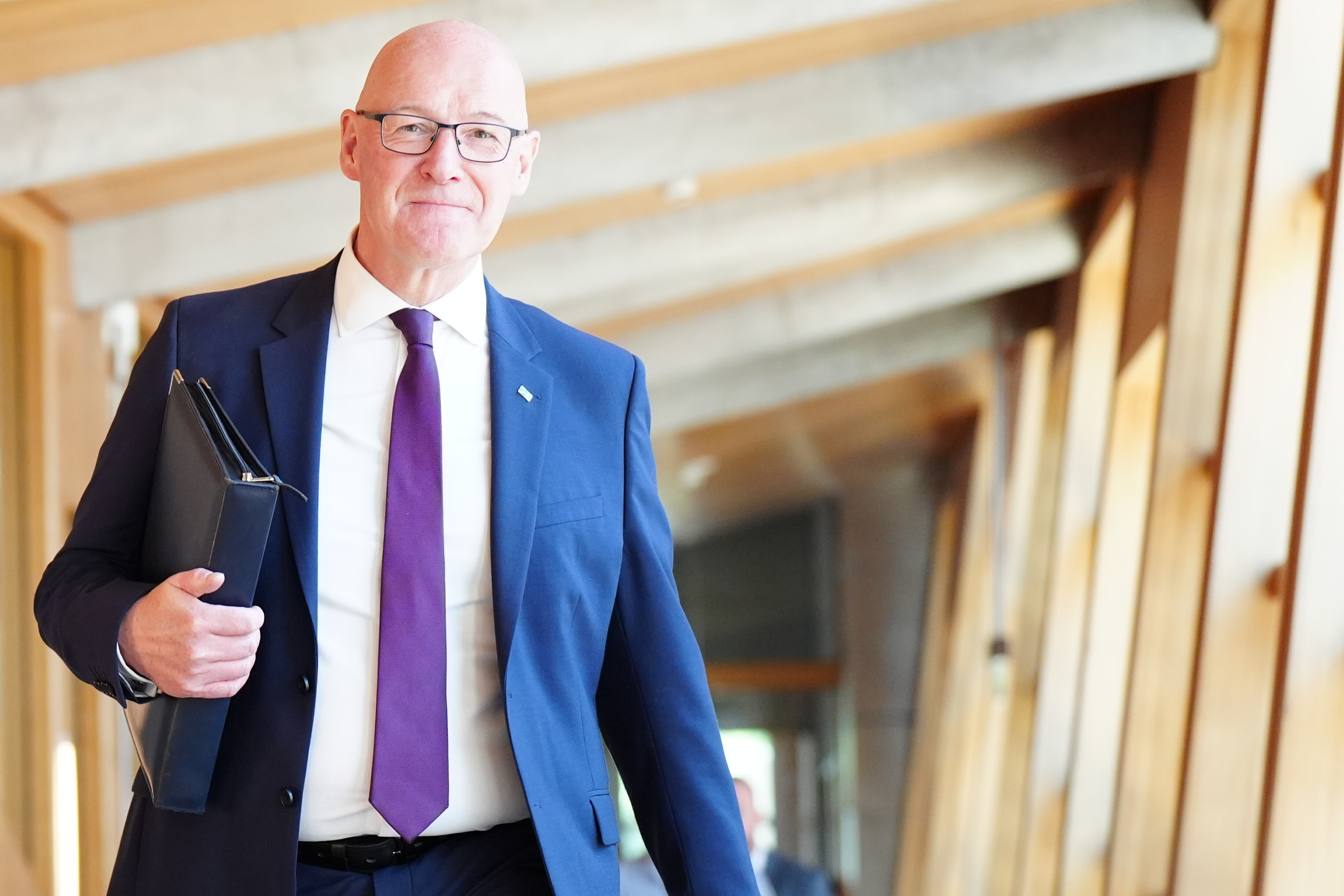
However, Mr Swinney was insistent that the vote in Holyrood on Tuesday showed that “the Scottish Parliament has clearly expressed its view that Scotland should have the powers to arrange an orderly referendum on independence”.
He added: “With the mandate of Parliament, I will now take that forward to dialogue with the UK Government to make sure that Parliament’s wishes, which, of course, are the wishes of the people are properly put into effect.”
The First Minister added: “I’ve got discussions scheduled with the Prime Minister, which I expect to take place in the next couple of weeks, and that will be an opportunity for me to progress the will of Parliament.”
Tuesday’s vote at Holyrood showed that “the democratically-elected parliament of Scotland has spoken,” he said.
Mr Swinney continued: “The largest number of pro-independence MSPs in history has voted to support the call for powers to hold a referendum on Scottish independence to be devolved to the Scottish Parliament.
“Try as they might, the Westminster parties cannot wish away the movement for Scottish self-determination.”
The Scottish Parliament voted for Scotland to have the powers to hold an independence referendum.
Because Scotland’s future should be decided by the people of Scotland. pic.twitter.com/H2dj80c9Gn
— The SNP (@theSNP) May 26, 2026
The First Minister earlier told MSPs that Scots will “resoundingly” back the “golden opportunity” of independence if a second referendum takes place.
In a statement on the first day of Holyrood business after the Scottish election the SNP leader set out his plans for the next five years – and put independence at the heart of them.
He insisted to MSPs that leaving the UK will give Scotland “greater prosperity”, as a result of the country having control over its energy and being able to rejoin the European Union, the First Minister said.
He declared these two factors together “offer Scotland a golden opportunity”, saying that it was one he believed “people will vote for resoundingly when our nation has, once again, the ability to decide our own future in an independence referendum”.
While he accepted that “Westminster currently says no” to demands for another referendum, the SNP leader said Tuesday’s debate at Holyrood was “the start of a process” that he believes will lead to another referendum, with Scots then voting “yes to independence” when that vote is held.
Scottish Labour leader Anas Sarwar, however, said the debate was a “missed opportunity” to discuss vital issues in Scotland – as he criticised the First Minister’s “obsession” with independence.
Meanwhile, Scottish Conservatives leader Russell Findlay criticised the SNP leader for choosing to debate independence the day after former party chief executive Peter Murrell admitted embezzling SNP funds.
Mr Findlay declared: “The timing of today’s debate is comical.
“Today of all days John Swinney is banging the independence drum when the news agenda is dominated by his party stealing money from their own members and supporters, money the SNP promised to ringfence for independence.”
The Tory added: “Today of all days, John Swinney reckons the SNP can be trusted to take full control of an independent Scotland and our nation’s finances.”