The inquiry into the 1998 Real IRA atrocity is holding public hearings in Belfast.
The Omagh Bombing Inquiry has heard evidence about more than 20 “key individuals” identified as part of investigations into the atrocity.
Several of those named have terrorist convictions or have been identified as senior members of the Real IRA.
The dissident republican car bombing in the Co Tyrone town on August 15 1998 killed 29 people, including a woman who was pregnant with twins, in the worst single atrocity in the Troubles in Northern Ireland.
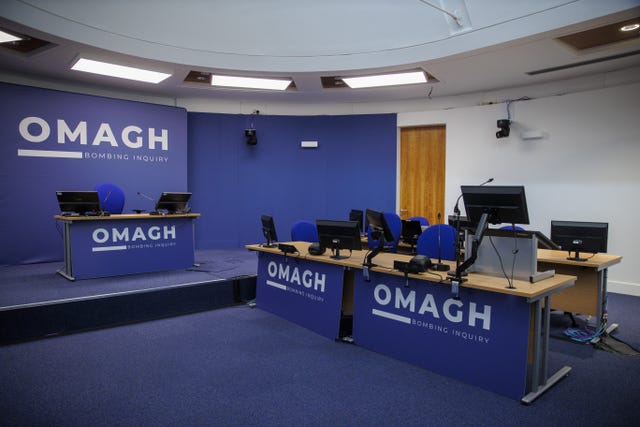
The Omagh Bombing Inquiry, chaired by Lord Turnbull, is holding evidential hearings in Belfast.
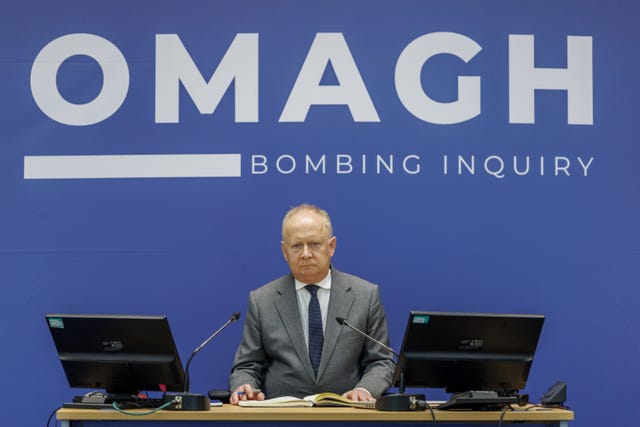
The latest phase of hearings, which will last for several weeks, is concentrating on the period before and after the bombing and will examine how it was carried out and who was responsible.
The inquiry was set up by the previous government to examine whether the explosion could have been prevented by UK authorities.
The hearing on Wednesday received evidence from inquiry analyst Mark Safranauskas, employed by Greater Manchester Police as a civilian in the Serious Crime Division.
The inquiry heard he had been involved in gathering evidence for electronic presentation in more than 100 police investigations, including into the 2017 Manchester Arena bombing.
Mr Safranauskas examined open material for the Omagh Bombing Inquiry’s legal team and has prepared two reports.
The material he was given access to included summaries of factual evidence compiled by the inquiry, diagrams of key individuals, work by Police Service of Northern Ireland analysts, video evidence of the likely route of the bomb car, photographs of suspects and witness statements.
In 2009, a judge in Belfast ruled that four men – Michael McKevitt, Liam Campbell, Colm Murphy and Seamus Daly – were all liable for the Omagh bomb.
A fifth man, Seamus McKenna, who has since died, was found not liable in the civil action.
Counsel for the inquiry Nick de la Poer KC said that because someone has been identified as a “key individual” in the inquiry legal team’s current working hypothesis does not mean they are involved in terrorist activity.
Mr de la Poer asked: “We are going to be seeing images of individuals who have been found liable for the Omagh bombing and people who are suspected of such involvement?”
Mr Safranauskas responded: “We are, yes.”
The inquiry was then shown a slide with separate photographs of the four men found liable for the bombing as well as an image of Real IRA graffiti.
It was then shown an image of the Coes Road area of Dundalk, a town in the Republic of Ireland.
Mr de la Poer said: a “number of connections” had been identified over the course of the police investigations with addresses in the area.
The inquiry was then shown a series of slides of more than 20 “key individuals”, setting out a range of personal, professional and phone attribution links.
They included Daly, McKevitt, Campbell, Murphy and McKenna.
Regarding Murphy, Mr de la Poer said he could be described “as a spider at the centre of a web”.
The inquiry has previously heard that McKevitt was the quartermaster general and Campbell had been director of operations of the Real IRA in 1998.