Experts believe the agave montana planted around two decades ago is blooming as a result of climate change.
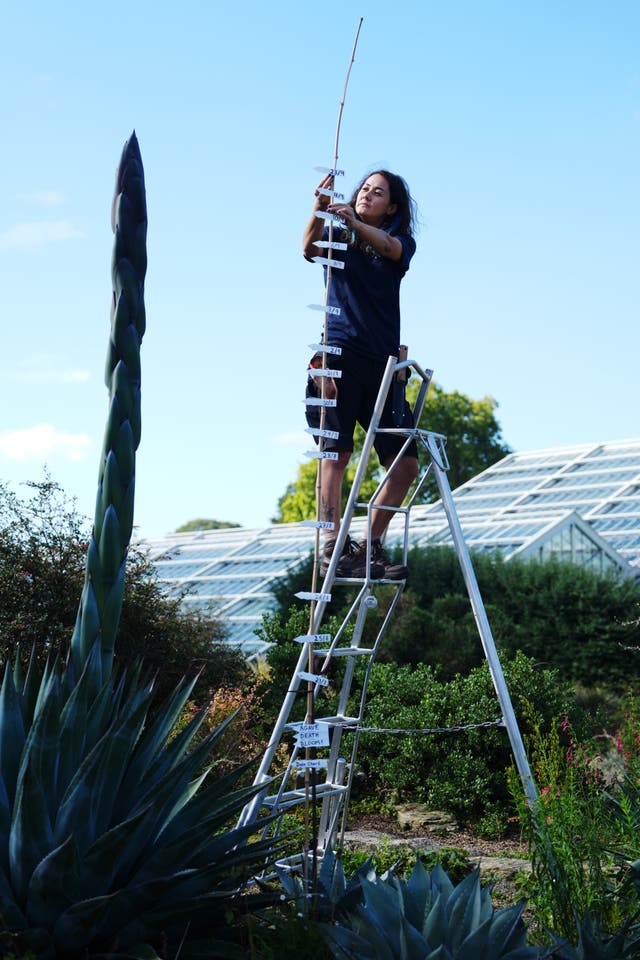
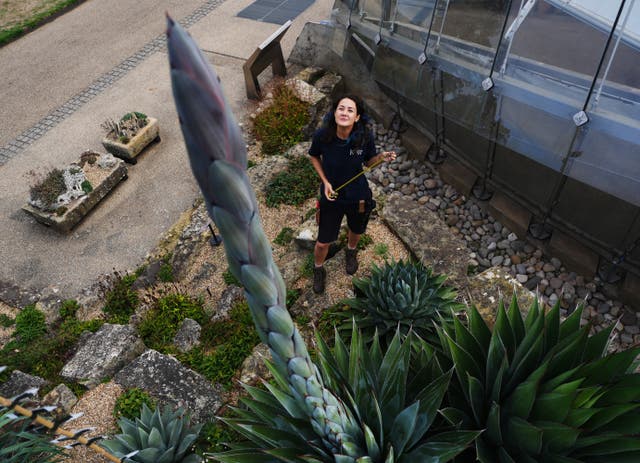
A rare death bloom has begun for a three-metre plant at Kew Gardens which will come to the end of its life with a spectacular display.
The agave montana was planted around 20 years ago and once it blooms it will open up into a massive inflorescence – a cluster of thousands of individual flowers.
The plant, which is native to the mountainous habitats of north-eastern Mexico, has been growing on average about 10cm a day and Kew Gardens, in south-east London, is looking to cross-pollinate it, calling it “the UK’s most eligible agave”.
The death bloom in the Rock Garden forces the rapid growth of an asparagus-shaped shoot, called a peduncle, that will reach five metres in height before sprouting yellow and pink flowers next spring.
Anna Lim, botanical horticulturist at Kew Gardens, said: “This immense inflorescence is an amazing botanical event and it’s something we might only get to witness once every couple of decades.”
The growth spurt will pause over winter as the plant goes dormant, and it will die once it has flowered.
“It really could be a once-in-a-lifetime botanical experience. Once it blooms, I’d encourage everyone to come and see it while they can.”
The mountainous succulents do not need watering over summer nor assistance in winter, perfect for drought-like conditions much of England has seen this year.
Monocarpic plants like this can spend decades without flowering before producing one enormous bloom, but they die after going through a single reproductive cycle.
Thomas Freeth, head of collection management at Kew Gardens, said it is likely the bloom was caused by this summer’s record-breaking extreme heat.
“In many ways it’s a tell-tale sign of our rapidly changing climate,” he said. “We need to seriously think about how we’re going to adapt our landscapes to cope and thrive in these conditions.
“I’m confident we’re going to see much more of it and related species planted in our gardens in the coming years.”
Ms Lim said the gardens are searching for a partner to cross-pollinate the plant.
“I’m already making inquiries in the agave community to see if we can track down the perfect pollen donor,” she said.
Only two other agave montanas are thought to have ever bloomed in the UK, with the most recent being in Norfolk in 2023, also believed to have been caused by a heatwave.
Kew Gardens planted two of the succulents in 2007 and the other plant is yet to bloom.