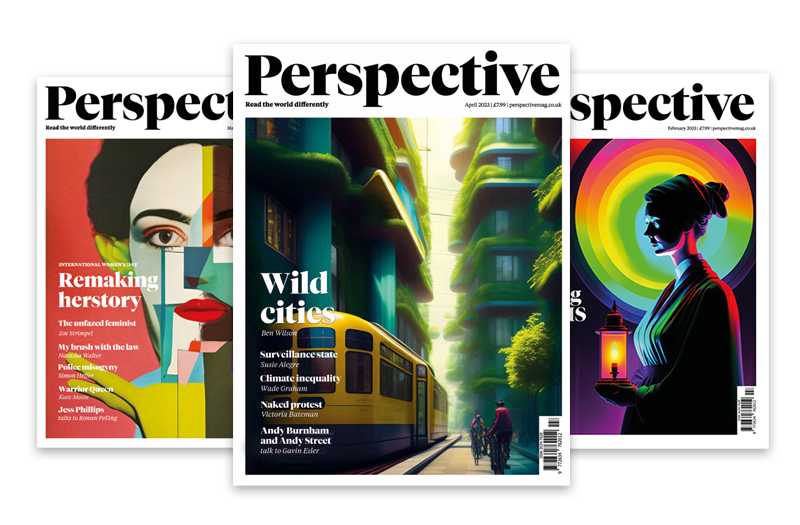
Last month I went to Susheila Nasta’s 70th birthday party in Greenwich, south-east London. I’d been feeling in a very un-partylike mood, but it turned out to be one of those once-in-a-decade, not-to-be-missed occasions. Everyone was there: a large pool of writers, academics and journalists I’ve met both here and in my birth country, Trinidad, a sort of alternative cosmos to the UK’s literary establishment. They included Trinidadian writer Lawrence Scott, the UK’s first black female publisher, Margaret “you thought I was a dead white man” Busby, Commonwealth Writers’ founder Lucy Hannah, Booker winner Bernardine Evaristo, Nobel Prize winner Abdulrazak Gurnah, Caribbean feminist scholar Alison Donnell, Sri Lankan-British author Romesh Gunesekera, Guyanese-Canadian writer Tessa McWatt, British poet and playwright Gabriel Gbadamosi, English novelist Maggie Gee and Scottish crime writer Nick Rankin. I know this polyglot mix of faces by their books and their “liming” habits; I’ve bumped into them in pan yards in Trinidad or literary events here. These are my people. For a few brief hours, I was transported, suddenly at ease, at home. All of us were connected to Susheila and the magazine she founded, Wasafiri, because for 40 years it has given space to writers across the world, many from colonised spaces, either living here in diaspora or moving between. A strong community spirit soaked the air as we greeted each other. Sweet, live steelpan music tinkled as we danced to old soca tunes and discussed how on earth the one per cent still ruled, and why the weather was so gloomy, and how do we get Corbyn in. I felt only love for my fellow diasporic writers then: we have made a space for ourselves over time. And I salute you, Susheila Nasta for giving us a network. Wasafiri, just like Perspective, is a small, plucky, independent magazine, offering other voices in a time of polarised views, the rise of nationalism and the slowly unravelling catastrophe of climate change at the end of the Anthropocene.
The divorce rate might plummet if every couple had a state-sponsored tantra top-up
Protest
I published a new novel last month, Passiontide (Vintage), and while it’s my eighth book, it never gets easier. Writer Gregory Norminton told me: “Writing is like tunnelling out of prison, digging digging digging through mud for years underground… only to pop your head up one day and be walloped by a person standing there with a spade.” Yes, reviews can be hard, but never mind. All writers know how rough things can be out there, and plough on, regardless.
Passiontide is based on a true crime, the 2016 femicide of a steelpan player, Asami Nagakiya, in Port of Spain and the protest it sparked. The mayor Tim Kee more or less blamed her death on the skimpy carnival costume she was wearing. My story shows women putting aside their differences to hold hands together in defiance. The community is the hero. Gender-based violence leads to the deaths of 81,000 women a year globally, according to Womankind Worldwide and this is my call for women to unite in stopping invisible everyday misogyny and femicide.
I’ve also spent years as a climate change activist, including inside Extinction Rebellion, and have watched Buddhists, scientists, doctors and lawyers, parents and teachers, teenagers, children and elderly people lying down in the road to lodge their protests, seen their despair and how they’re ridiculed, sidelined and marginalised, vote-wise, by our leaders. Passiontide imagines a pesky group of activists as a majority force to be reckoned with. And while it’s a protest novel, people tell me it’s funny too.
Pleasure
I recently signed up for an eighteen-month tantra training. At 59, this feels brave. Once menopaused, I no longer had the mysterious power all younger women possess, of men’s romantic projection. I no longer held their eye. At the same time, I’ve spent most of my 50s coming to terms with the loss of my sexual drive towards men.
So I contacted Jan Day, the UK tantra teacher who was key to my sexual journey in my 40s. I signed up tentatively to a seven-day workshop over Easter and, to my surprise, over half of the participants were my age, all of us with the same quandary: how can older women and men feel sexual when all our social conditioning tells us to step back?
I’d been deeply disappointed in myself for becoming browbeaten into a female stereotype, the sexless crone. I’ve always lived my life on the edge, in the margins, unmarried and child free, writing books, travelling, making my own way and status in the world and have been known for my sex writing – “out there” in the conscious sex community. How and why had I fallen into such a normative quagmire? Now, with an eighteen-month tantra course ahead of me, I’m back.
Tantra’s etymological root, “tan”, means “to expand”. This work helps people to slow down sexual encounters and face much joy, surprise, sensuality and yes, discomfort in a conscious environment. Yes, there’s lots of touch, and yes, even some sex, and lots of dancing, talking and meditation in a safely held workshop space. Jan Day calls it “intimacy school for adults”. I’ve often thought the divorce rate might plummet if every couple had a state-sponsored tantra top-up every five years. Tantra still attracts scorn from the normative world, of course, but that’s OK by me; I’m no longer part of it.
Monique Roffey, FRSL, is an award-winning Trinidadian-born British writer. Her novel “The Mermaid of Black Conch” won the 2020 Costa Book of the Year Award. She is a co-founder of Writers Rebel within Extinction Rebellion and a Professor of Contemporary Fiction at Manchester Metropolitan University. “Passiontide” is out now