Noah Donohoe, a pupil at St Malachy’s College, was 14 when his naked body was found in a storm drain tunnel in north Belfast.
A senior PSNI officer has denied telling police witnesses “what to say” when giving evidence to the Noah Donohoe inquest.
PSNI Detective Chief Inspector Phillips, who was a senior investigating officer in the high-profile missing person investigation, said he “made no mention at all” of the schoolboy’s coat to a junior officer, who could not explain why he said in evidence that he had been tasked with searching for it.
Noah, a pupil at St Malachy’s College, was 14 when his naked body was found in a storm drain tunnel in north Belfast on June 27, six days after he left home on his bike to meet two friends in the Cavehill area of the city.
A post-mortem examination found the cause of death was drowning.
In March, PSNI Constable Wharry told the inquest, now in its 20th week, that on June 25 2020, four days after Noah disappeared, he was tasked with assisting CID with the arrest of a man at a flat in Belfast.
The man, Daryl Paul, previously pleaded guilty to stealing a rucksack containing Noah’s laptop and school books.
Mr Wharry told the court he had been advised that Noah’s laptop, bag and green coat were in Paul’s possession.
Brenda Campbell KC, representing Noah’s mother, Fiona, asked him: “Did you understand before you got into the witness box today that a concern was the failure of the police to look for Noah’s green coat?”
The officer said he had been “briefed” at Musgrave Street police station before he gave evidence that there had been concerns about the coat.
At Belfast Coroner’s Court on Monday, Mr Phillips read jurors a statement from himself dated 20 April 2026.
He said the “routine for PSNI witnesses has been to meet myself and my team in Musgrave” before giving evidence to the inquest.
He said police witnesses get copies of hard evidence and are accompanied to and from court.
Mr Phillips said the majority of police witnesses have consulted PSNI council, led by Donal Lunny KC, before their court appearance, sometimes more than once.
Discussing his meeting with Detective Inspector Cunningham and Constable Wharry, he said he told the latter he could expect to be a “fairly short witness” on a “fairly discrete issue” of body-worn footage.
“I gave no consideration to the matter of the search overall being put to him nor was it discussed,” his statement read.
He added: “At no time did I tell either of the parties what to say.
“I did not discuss the nature of the search with Con Wharry and made no mention at all of Noah’s green coat.”
Earlier on Monday, the inquest heard from PSNI Detective Inspector McCartan, who was a detective constable in 2020 when he led the house-to-house searches conducted to find the missing schoolboy.
As house-to-house co-ordinator, he said his task was to attend addresses to identify potential witnesses.
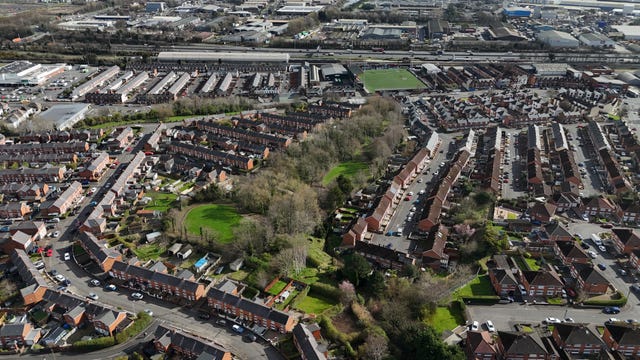
The parameters for the search included homes on a number of streets in the Northwood Drive area near the culvert where Noah’s body was later found.
Mr McCartan said full resident house-to-house forms were not completed for each visit as it would be “hugely time-consuming”, officers instead using a questionnaire form that Mr McCartan himself produced and he said was “considerably quicker”.
Ms Campbell questioned the officer about the process for flagging any “thematic” issues uncovered in the searches.
Mr McCartan said he collated a spreadsheet that was updated at the end of each day by officers involved in searches, that the investigating officers and CCTV and witness co-ordinators would have had access to.
Ms Campbell highlighted “two neighbours”, one referring to “a back door handle being tried around 3am” and another referring to screams heard in the area on the Sunday night when Noah was last seen.
The inquest was then shown a questionnaire from a house in Northwood Road where the resident reported hearing “noises” and a comment reading “back of house”.
Mr McCartan said the officer who filled out that form “would have pressed” the residents if there was a “specific noise” and also said he could not say “for definite” the back-of-the-house comment referred to where the resident felt the noise was coming from.
The officers’ spreadsheet was then shown to the court and beside one house number a comment was written “misper naked, deserted bike and walked up back of house”.
Asked if Mr McCartan thought the officer was telling him the residents “saw misper naked”, he replied “I can’t answer that”, adding “I didn’t quiz (the officer) on what she had put on each of those boxes”.
Later, Ms Campbell said the spreadsheet implied “on one reading” a witness who saw Noah naked and asked “whose job is it to flag that to make sure somebody’s going out there to get that statement?”.
Mr McCartan said it would have been reviewed by CCTV and the witness co-ordinator after being added to the spreadsheet.
Pressed on the fact there is no statement from that witness from 2020, the officer said it is “not for me to collate witness statements”, his job at that time was trying to figure out “where Noah was and where he had gone to next”.
The jurors later saw a house-to-house questionnaire where the residents described a “tall” boy with “dark hair” and seeing him “take his top off and put it on the wall” at the address where some of Noah’s clothes were later found.
Ms Campbell put it to the officer that when Noah was at that address at Northwood Drive “at least two people had eyes on him and we have statements from neither of them”, asking Mr McCartan “your response is the same, not your responsibility, not your remit?”, to which he responded “yes”.
She showed the court an entry on the spreadsheet beside a redacted house number with the comment “strange activity”, which Mr McCartan said he could not elaborate on.
Ms Campbell asked “has anyone ever asked you to?”, to which he replied “no”.
Later, under questioning by Mr Lunny, Mr McCartan agreed that the information on searches in the spreadsheet was “accessible by any officer during that week” and if they “had any questions” they would be able to contact him.
Mr Lunny asked if investigating officers would “know where to go to get that information” if they had questions such as those posed by Ms Campbell, to which Mr McCartan said: “Yes.”
Police logs were also seen by the jury, showing that by June 26, 187 witnesses had been identified by police.
By July 9 2020, more than 200 potential witnesses had been identified before being honed to 13 “significant witnesses”.