The Prime Minister warned that UK household bills would likely be hit unless the situation improved.
Sir Keir Starmer has called for a return to the US-Iran ceasefire after a “challenging” two days as hostilities flared and Donald Trump declared the interim truce over.
The Prime Minister warned that UK household bills would likely be hit unless the situation improved, and said allies must focus on “playing our part” in opening the Strait of Hormuz and securing a deal.
The US president has threatened to carry out further raids against Iran, describing the Tehran leadership as “scum” and “dishonourable”.
“I think it’s over. I don’t want to deal with them any more,” he said earlier when asked about the state of the initial ceasefire deal between the two parties.
.@POTUS: “If we make a deal with Iran, I’m not sure that will stick because I’ve found them to be very dishonorable people.” https://t.co/ZVCFOxjeug pic.twitter.com/Zl7BOqz8BS
— Rapid Response 47 (@RapidResponse47) July 8, 2026
US forces launched a wave of strikes on Iranian targets, which Mr Trump has said was in response to Tehran’s targeting of tankers in the strait.
Iran said it had retaliated with strikes against Bahrain and Kuwait.
Oil prices spiked again following the reignition of hostilities and Mr Trump’s comments on the fragile ceasefire, causing further uncertainty in economies around the world.
Asked how worried people in the UK should be about the developments, the Prime Minister told reporters: “The last day or two has obviously been challenging.
“I think most people back at home will be wanting to see the ceasefire continue, and wanting to see stability, and want to see the Strait of Hormuz open, because that means that the impact on our economy will reduce.
“We’ve all seen the impact already on energy prices, people going to fill up at the petrol station and the forecourt can see the impact of that.
“So, what’s really important now is not withstanding challenges that we all focus on getting back to that ceasefire, implementing the understanding and playing our part in getting the Strait of Hormuz open, which does involve pulling together the coalition that the French and the UK are leading on in relation to reassurance, it’s very important.
“And so that is where my focus is. I am not going to pretend the last few days has not presented additional challenges, of course it has.”
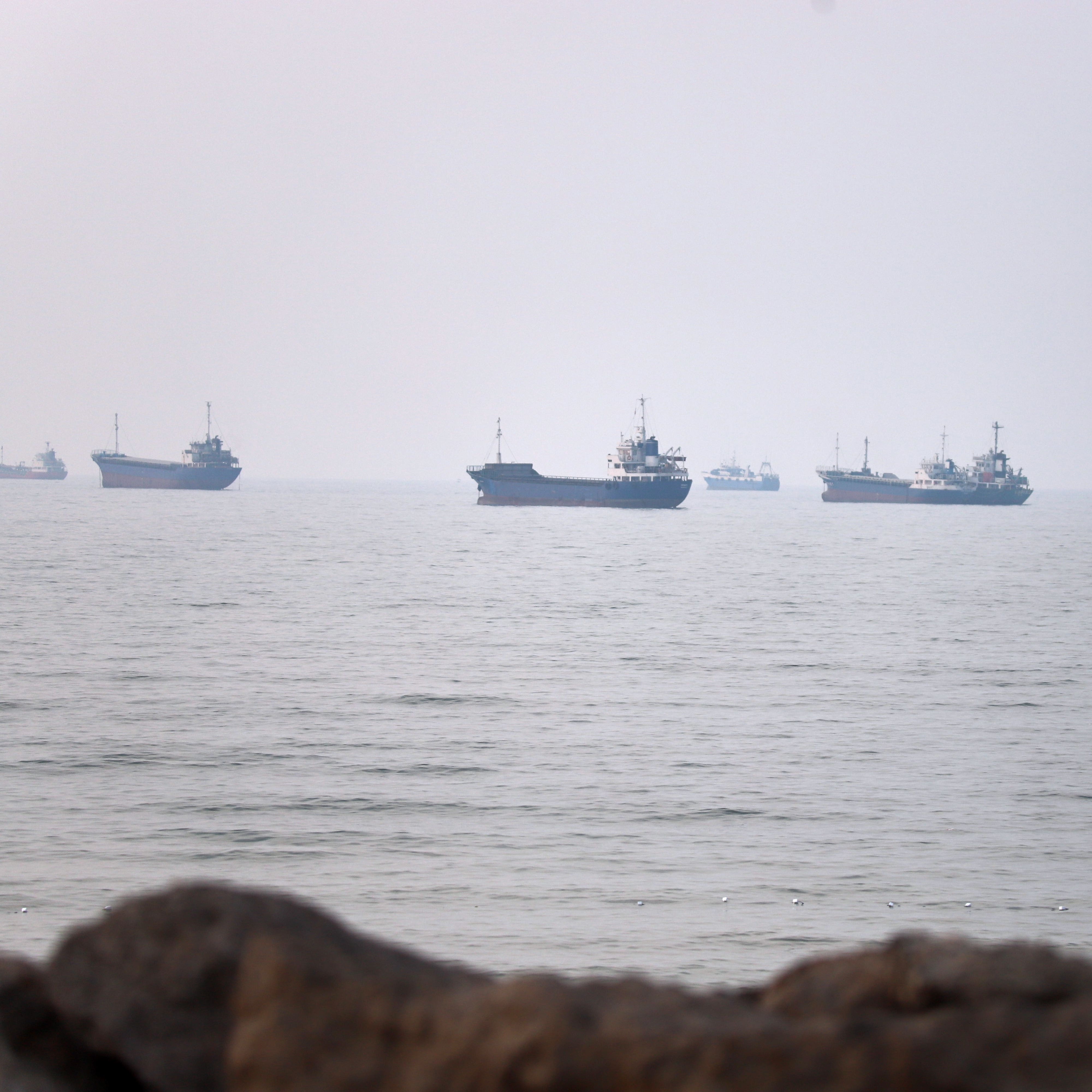
Sir Keir has said UK and France will lead a multinational reassurance mission to safeguard the Strait of Hormuz, a key global shipping lane.
He added: “It’s important to keep focused on what is it we want to achieve – back to the ceasefire, and let’s get the deal implemented, Strait of Hormuz open.
“That’s really important for the region, for the world, and for every single person listening to this and watching this back to the United Kingdom, because they know that their household bills are likely going to be impacted if we don’t get that situation as quickly as possible.”
The renewed hostilities threaten to again disrupt shipping transiting the Gulf channel and cause difficulties in securing a permanent end to the conflict, launched by the US and Israel on February 28.
Speaking at the Nato summit in Turkey earlier, the president said: “If we make a deal with Iran, I’m not sure that will stick because I found them to be very dishonourable.”
Asked if attacks would continue against the Tehran regime, Mr Trump said: “Normally I wouldn’t tell you, but you know what, there’s not a thing they can do about it.
“So, the answer is probably.”
Washington has also pulled Tehran’s licence to sell oil, which was only issued last month following an interim ceasefire deal.
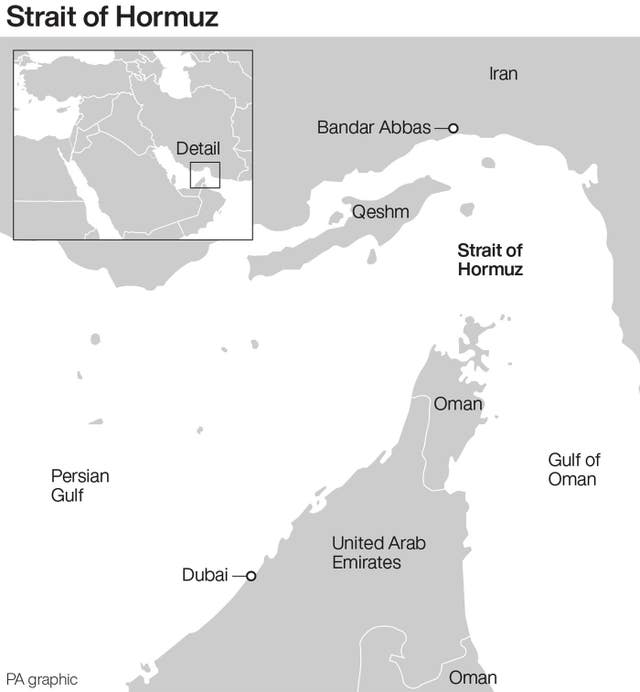
A declaration agreed at Ankara by Nato’s leaders said Iran must never have a nuclear weapon and it called on Tehran “to fully respect freedom of navigation in the Strait of Hormuz”.
Brent crude oil jumped by around 6.5% to 79 US dollars a barrel on Wednesday morning after Mr Trump said the ceasefire was over.
In a statement on X early on Wednesday, the American military said: “US Central Command (Centcom) forces completed a new round of offensive strikes against Iran, July 7, hitting over 80 targets with precision munitions as an immediate response to Iran’s latest attacks on commercial vessels transiting the Strait of Hormuz.
“US forces struck Iranian air defence systems, command and control networks, coastal radar sites, anti-ship missile capabilities, and more than 60 Islamic Revolutionary Guard Corps small boats in and near the strait to degrade Iran’s ability to continue attacking international commerce flowing through the international trade corridor.
“Iran recently attacked three commercial vessels transiting the strait, including Marshall Islands-flagged M/T Al Rekayyat, Saudi Arabia-flagged M/T Wedyan, and Liberian-flagged M/T Cyprus Prosperity.”
The statement said the “unwarranted aggression by Iranian forces” marked a “clear and dangerous violation of the ceasefire and undermines freedom of navigation”, adding: “Centcom forces remain postured and prepared to hold Iran accountable when the agreement is not adhered to or obeyed.”
Bahrain, which plays home to the US Navy’s 5th Fleet, and Kuwait, where US Army personnel are based, sounded missile alerts early on Wednesday.
A statement by Iran’s Revolutionary Guard confirming strikes on military sites in their neighbouring countries said the “child-killing and terrorist US army” had “openly violated the ceasefire” with attacks on coastal bases and civilian stations.
Following the US strikes, Iran’s top negotiator Mohammad Bagher Ghalibaf accused the US of committing “major” violations of the ceasefire deal.
In a post on X, he said the violations included “Persistent threats of further strikes”, “Reinstating oil sanctions” and “Attacks on southern Iran”.

“The era of bullying and extortion is over. It leads nowhere. We don’t fold,” Mr Ghalibaf said.
Three civilian vessels were hit in the strait on Tuesday, the most in a single day since late April, according to UN International Maritime Organisation figures.
In response, maritime authorities have raised the threat level from “substantial” to “severe”.