It comes after a series of outbreaks of meningitis, with the most serious being in Kent earlier this year which left two teenagers dead.
Teenagers should be offered a vaccine on the NHS to protect against deadly meningitis B (menB), Government advisers have recommended.
The move from the Joint Committee on Vaccination and Immunisation (JCVI), which needs approval from the Government, means youngsters should get a jab around the age of 15, with catch-up programmes for those who would otherwise miss out.
It comes after a series of outbreaks of meningitis, with the most serious being in Kent earlier this year which left two teenagers dead.
The JCVI is recommending:
– A booster jab around age 15 for those who had a menB jab as a baby (those born on or after May 1 2015). The first cohort this recommendation applies to will turn 15 in 2030. Children who missed the jab as a baby will be offered two doses.
– In addition, the JCVI says it “strongly supports” giving two doses of the menB vaccine to children born on or before April 30 2015. They would get this when they are around age 15. This group were not offered the vaccine on the NHS as babies and so have missed out on protection as infants. Offering jabs when they hit their teens protects them at the point they are next most at risk.
– Because it could take a while for any programme to be implemented, the JCVI would also like to see a catch-up programme to ensure anyone who misses a vaccine does not lose out.
The move by the JCVI is separate to an announcement last month on a summer programme, which still stands.
Around a million Year 13 pupils and those under 25 starting university this autumn are being offered the menB vaccine on the NHS this summer.
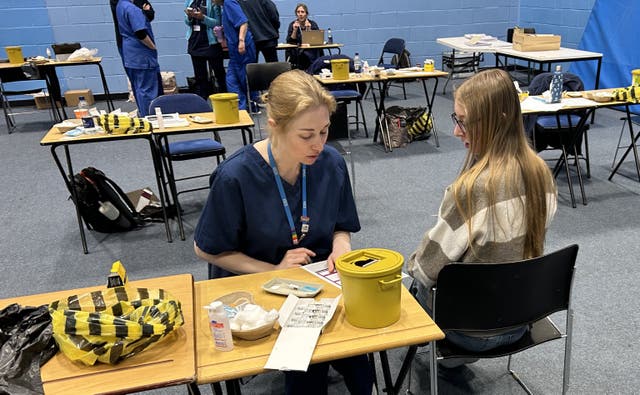
This one-off jab programme offers two doses to youngsters aged 17 to 18 in Year 13, plus those aged under 25 going to university or other residential further education this autumn.
Young people are being offered their first dose from July 20 with a second dose given in August. Two doses, at least 28 days apart, are needed for full protection.
Professor Wei Shen Lim, chairman of the JCVI, said: “Following the meningitis outbreaks in early 2026, a one-off programme for two-doses of menB vaccine is being offered to eligible young people this summer.
“We encourage everyone who is eligible to book an appointment online to receive the vaccine at a local pharmacy, in time for the second dose to be received before heading off to university or college.
“For protection, two doses of the menB vaccine are necessary, at least 28 days apart.
“Additionally, JCVI has now also provided Government with a recommendation and additional considerations for a future routine menB adolescent vaccination programme for those aged around 15 years.
“(The Department of Health) will now consider this with a decision to be made in due course.”
Data suggests the menB vaccine is highly effective, providing strong protection for at least five years after vaccination.
Juliette Kenny, 18, died in the Kent outbreak and her family have been campaigning for teenagers and young people to be routinely given access to the menB vaccine.
The Kent outbreak was the fastest growing and largest seen in the UK, and other smaller clusters of meningitis in young people since then have been bigger than expected.
Close and prolonged contact in halls of residence, shared homes and at social events can increase the risk of contracting menB.
Cases of menB tend to peak in October to November each year.
Dr Shamez Ladhani, consultant epidemiologist at the UK Health Security Agency (UKHSA), has said previously the likely reason why there have been more meningitis clusters this year is that population immunity against menB is currently low.
“The most likely explanation is that we actually have had 25 years of declining cases of menB disease,” he said.
“Now, meningococcal disease cycles go through cycles of 20 to 30 years.
“It goes down when you have good population immunity, and then that immunity goes down and new strains appear where the population doesn’t have immunity against these strains, and then cases start going up again.”