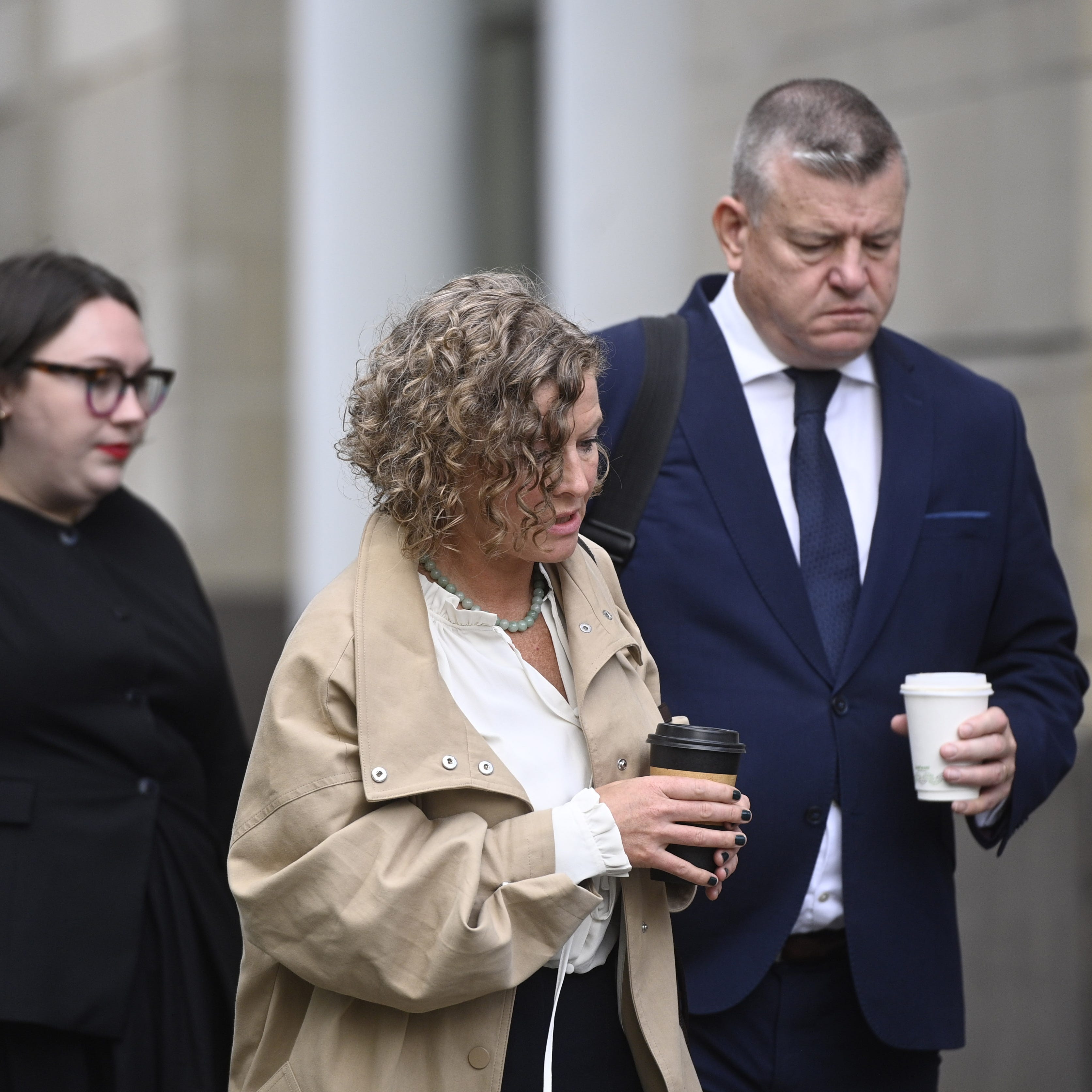
Andy Seaman joined military veterans to meet MPs and peers and argue against former soldiers being shielded from accountability.
The brother of a British soldier killed in Northern Ireland in the 1990s has warned that honouring veterans must not come at the expense of victims’ rights amid opposition to Labour’s Troubles legislation.
Andy Seaman joined military veterans Nicholas Mercer and John Donnelly to meet MPs and peers on Monday and argue against former soldiers being shielded from accountability.
They reject claims that veterans are facing a “witch hunt” of potential prosecutions if Labour is successful in its efforts to repeal and replace the Legacy Act passed under the Conservatives three years ago.

The Tory legislation offered conditional immunity for perpetrators of some Troubles crimes in exchange for co-operation with a new reconciliation body, but Labour’s Troubles Bill has already seen MPs vote to scrap that immunity provision.
Mr Seaman believes the IRA killed his brother Tony Harrison, who was shot dead at his fiancee’s home in East Belfast in 1991.
He had managed to get the Northern Irish police ombudsman to look into police conduct surrounding the investigation into his death – but this was dropped under the Legacy Act.
He has his brother’s military ID nestled in the top pocket of his jacket as he prepared to meet with MPs and peers, and explained it was important to have “brought a little piece of him along”.
He told the Press Association: “Only one person has ever been convicted in connection with his murder, and that was a taxi driver that tipped off the IRA.
“But the men who actually killed Tony have never been arrested or charged or even questioned in connection with his killing.”
The Legacy Act passed by the Tories had a “massive effect on us being able to find the truth about Tony’s murder and the conduct surrounding his case”, he said.
He rejected the idea that Labour’s legislation to repeal that will spark a “witch hunt” and hopes it will reopen the door to finding out the truth about his brother’s death.
Only six prosecutions have been pursued of former members of the armed forces over actions taken in Northern Ireland – resulting in only one conviction.
Mr Seaman says: “Whichever way you want to paint it, that does not constitute a witch hunt.
“But the narrative is out there, so I’m here to challenge that rhetoric because it’s the rhetoric that has caused that fear.
“And rather than, you know, scaring elderly veterans and painting a picture of hundreds of them being dragged through the courts, if we could just turn the rhetoric down a little bit and maybe understand that you know victims’ rights, whether military or civilian, everybody has a right to truth.

“Everybody has a right to justice, and we need to create a system that allows for both. So we can honour our veterans, we can understand and respect and and take into account the circumstances in which they served.
“I have enormous respect for everybody who served during the Troubles, but at the same time, like I said, not at the expense of the rights of victims’ families.”
Reverend Nicholas Mercer, a retired lieutenant colonel and lawyer who served in the British Army for 20 years, said he sympathises with veterans who are worried about potential prosecutions that could come from this.
“I’m ex-military. We are sympathetic to soldiers and soldiers who are serving conflicts around the world. That was the nature of our job,” he told PA.
“But I was also a legal officer, and therefore we expected soldiers to comply with the rule of law. That’s at the essence of all British military operations.”
He said he did not believe the new legislation could expose veterans to “vexatious prosecutions”, calling the idea a “populist myth”.

“I was in the Iraq war, where the vexatious claim narrative was presented endlessly by the press.
“It’s a myth, and it was examined by the Joint Committee on Human Rights in the House of Commons during the Overseas Operations Bill, and they couldn’t name one vexatious case.
“So this is a bit of a populist myth, if I can put it that way.”
Retired Brigadier John Donnelly, chairman of trustees for the Centre for Military Justice, said it was unhelpful to pit veterans and victims against each other.
“I think it is really unfortunate that some people are seeking to pitch veterans against victims because some of the victims are themselves veterans.
“I think when you start framing the debate in those terms, then common sense goes out the window, and that’s really unhelpful.
“And you know, I go back to the point: what’s this all about? This is about the ongoing peace in Northern Ireland, and this is about honouring the legacy of the people that served there.”
Grainne Teggart of Amnesty International, said the message was that “not all British Army veterans want impunity or special treatment”.
“They want this Parliament and government to defend rights and the rule of law through the Troubles Bill and elsewhere,” she said.
Labour’s legislation is designed to replace the Conservative government’s 2023 Legacy Act, which halted civil cases and inquests into Troubles deaths and also included a conditional offer of immunity for the perpetrators of Troubles crimes in exchange for co-operation with an information recovery body.
The newer Bill will lead to restructures at the information recovery body, changing its name from the Independent Commission for Reconciliation and Information Recovery to the Legacy Commission.
It will also allow a small number of inquests which were already started to continue but block fresh inquests from entering the system, and set up the Independent Commission for Information Retrieval in a bid to help families gather information about what happened to their loved ones during the Troubles.
MPs backed the Bill at the second reading stage in November last year by 320 votes to 105, majority 215.
They are yet to consider amendments to the legislation at committee stage, which is now scheduled for mid-October – after a recess for the political party conference season which begins this week.