Talks about her latest book Best of Friends

Oh my God
What do we believe in?
“How come there’s always so much politics in your novels?” The question came from a young woman at an American university a few years ago, and it surprised Kamila Shamsie. “Maybe it’s a consequence of growing up in a country like Pakistan,” she says, “but I don’t think of ‘politics’ as a separate thing to the rest of life. Without knowing what would happen in 2022, I told her: ‘You need to imagine that something like Roe v Wade gets overturned, and then you would see there is no separation between the personal world and the political world.’ Maybe, unfortunately, she does see now. Hmm.”
Shamsie has always written novels that explore the impact of Big Politics on Normal Lives. The daughter of acclaimed journalist mother Muneeza Shamsie, Kamila was born in Karachi in 1973, went to university in the US and now lives in London. Her assured debut novel, In The City By the Sea (1998) was set in an oppressive dictatorship and written from the perspective of an eleven-year-old boy whose dissident uncle is arrested. Orange Prize-shortlisted Burnt Shadows (2009) explored the aftermath of the atomic bombing of Hiroshima. And her Women’s Prize for Fiction-winning Home Fire (2017) reimagined Sophocles’ Antigone set in the British Muslim community, exploring the ways the characters struggled to maintain their culture and their Britishness.
“The landscape of politics had nothing female about it, it was all male. And then suddenly there was Bhutto and it felt like: how is this happening?”
Her new novel, Best of Friends follows two bright, ambitious young women from their intense adolescence in 1980s Karachi to their successful professional careers in post-Brexit London. Zahra is the tall, skinny daughter of a TV cricket show presenter. Newly curvaceous Maryam is due to inherit her wealthy grandfather’s business empire. Zahra knows she needs to achieve academically if she wants to make her way in the world. Relaxing behind the gates and gun-toting security guards of her palatial family home, Maryam believes power will fall into her lap regardless of her grades. Yet their friendship is like any other between teenage girls of the era – they kiss posters of George Michael and compete for the attention of the sexiest boys in their class.
Later, one will be in business and the other will be a civil rights campaigner. They will have different interests when it comes to economics and the rights of immigrants. They will have long walks in Primrose Hill. But they will have old scores to settle and a different patriarchy to fight.
Crisp and cool via video link, Shamsie tells me that the story had its genesis in something her sister said when they were in their early twenties. “She told me: ‘The friends we make in adulthood become friends because we have something in common. But the friends we make in childhood are friends because they’ve always been there.” She tilts her head, still questioning. Then nods. “Well, that stuck with me,” she says. “It felt true to me at the time, and it’s become truer and truer, the deeper I get into life. You get busy in your twenties and 30s and then people come back in your 40s. The shared history then strikes you as meaning an awful lot.”
Shamsie says that friendship is often only treated “as a subplot” in fiction. We focus on the families and romances. But she has found that “friendship has been absolutely central in my own life.” At literary festivals she notices it’s often women who come together. “Especially older women. I was at one event in Pakistan where I looked out at the audience and saw all these women in their 70s and 80s. They had outlived their husbands. They had come with their closest friends who really were their support group. A lot of women marry older men and women live longer so there is going to be that point, you know.”
But she also noticed that while her London friends were more like her (“writers, journalists, academics”) her old Karachi mates were “more corporate, bankers”. They had a different take on life. “Then 2016 happened,” she says. “Between Brexit here and Trump’s election in the US – where I lived for a long time and still have a lot of friends – I was hearing these conversations in which people were saying ‘Well, I can no longer speak to X or Y person’. People who had always accepted their differences could no longer tolerate each other. They couldn’t pretend those differences didn’t matter any more. Although I doubt that many people were surprised to find out which way their friends and relatives were going to go on those issues.”
Shamsie thinks it was at this point that people in the West realised that political differences – long unspoken, but always noticed – “became deeply personal. They realised that how you see the world, how you see your place in it, how you think people should treat each other… These are not external issues.” She believes that those who grew up under General Zia’s regime in Pakistan always knew that.
“I had never thought until I wrote this novel that maybe there was something formative about being fifteen when Zia was killed and Benazir [Bhutto] came to power in Pakistan [in 1998]. The landscape of politics had nothing female about it, it was all male. And then suddenly there was this woman and it felt: how is this happening? We saw her go into those all-male spaces.” She suspects that, watching Bhutto take the reins, “perhaps that made it inevitable that Zahra and Maryam would also both go into certain positions of power.” If you see it, you can be it? I suggest. “Absolutely.”

Despite the political advances of women in Pakistan, Shamsie’s heroines are vulnerable to both the potential violence and the judgement of men in their culture. Like the young Shamsie, they delight in the gold-titled bonkbusters of Jackie Collins [she notes that “those of us who read her in the ’80s were not surprised by the #MeToo revelations of the 2010s!”]. As middle-class grammar-school girls they are protected from certain layers of misogyny. But they both experience a vulnerability that the author neatly defines as “girlfear”.
Despite the political advances of women in Pakistan, Shamsie’s heroines are vulnerable to both the potential violence and the judgement of men
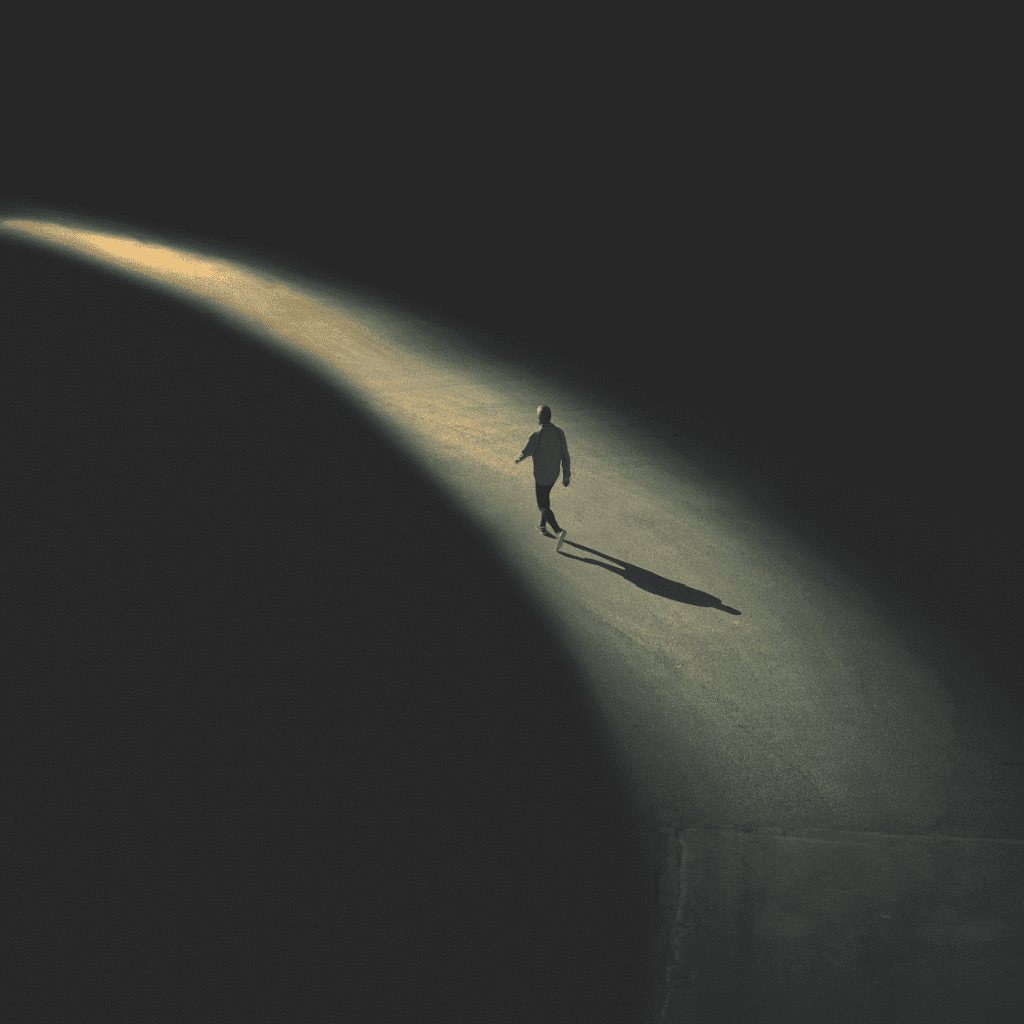
Shamsie tells me she came up with this term about seven years ago, “and you’ll never guess where I was. I was on a ship in Antarctica for a travel piece. It was a small ship and I was one of only a few people [on board], who I’d become comfortable with over a week or so. I walked out onto the deck at night, and I was standing there watching the icebergs in the distance and I suddenly felt odd. It took me a moment to work out why that was. And then I realised: I’m alone, outdoors, in the dark and I don’t have an antenna out for danger. Until that moment, if you had asked me if I felt safe walking alone at night in London I would have said yes. But at that moment I realised that – although I continue to walk alone through London – when I do, a part of me is listening out for those footsteps, alert to the shadows and moving a little faster than normal.”
If Shamsie’s novel shows politics intruding on the private lives of women, she also reminds readers that it invades male sanctuaries like sport. In one particularly tense scene, Zahra’s father, a cricket commentator, is ordered to give General Zia public credit for the national team’s sporting success. Later, a poor man stealing from Maryam’s grandfather is savagely beaten with a cricket bat.
“Cricket was always political,” she says. “It came to the subcontinent via empire and then it became the thing we could beat our former colonial masters at. When I was growing up, I knew only one girl who played cricket because it was largely played in the street – a public space that women were not allowed to be in. But we were all watching it on TV, boys and girls together, in a way I didn’t see in England. You were allowed to love the game so long as you accepted that your role was that of the spectator.”
She tells me that the story of women’s cricket in Pakistan started as Bhutto became Prime Minister. “There were these two girls who had been to university in England and they really wanted to set up a women’s team in Pakistan. When Bhutto took power, the elder of the two girls thought that if a woman could lead the country then we could certainly have a cricket team. She organised a match in Karachi between a women’s side and a men’s side made up of ex-professional cricketers.” A sigh. “But the religious parties found out and launched such massive protests that the police said the match was too much of a security threat to go ahead.” So, one step forward and one step back.
Shamsie thinks that while Western countries have seen a steady “march of progress” in women’s equality, Pakistanis are more aware that “the pendulum swings back and forth”. She points out that “Bhutto lost power after three years, after all.”
She vividly recalls the moment when Doris Lessing won the Nobel Prize for Literature in 2007. “We were in that shaken state, post 9/11, Iraq war. Someone asked her: ‘What do you say to young people who don’t have that much hope?’ and, bless her, she said: ‘When I was growing up we had Hitler,
Stalin, apartheid in South Africa and not much better in America. But look: these things have gone. They don’t go easily and of course they leave consequences and other things come to take their place. But they do go.’ I held on to that.”
Shamsie tilts her head. Smiles sadly. “Of course,” she says, “the thing that’s changed is climate change. You can no longer say the pendulum of history can swing back on that. I look now at the floods in Pakistan and I know we have to recognise that there is such a thing as the point of no return. That is a new kind of awfulness that we have to live with.”

Your email address will not be published. The views expressed in the comments below are not those of Perspective. We encourage healthy debate, but racist, misogynistic, homophobic and other types of hateful comments will not be published.