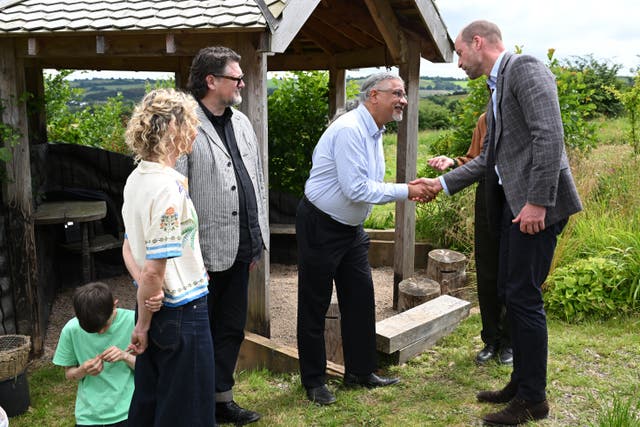
The prince toured the Apricot Centre near Totnes which works to both regenerate the land and foster wellbeing.
The Prince of Wales met a pig called Ginger Spice and taste-tested a strawberry on a visit to a regenerative farm in Devon.
William toured the Apricot Centre near Totnes, which combines food growing with education and wellbeing programmes grounded in nature.
The heir to the throne was taken round the 120-acre farm on Thursday, starting with the food packaging section of the site, where lettuce was being added to bundles of fresh produce destined for direct customers, market sales and local food banks.
The prince also headed to the strawberry patch, where he sampled one of the fruit, after admitting he had already been “eyeing up” the strawberries and raspberries in the packaging area.
He came across one of the resident farm animals, surveying a large ginger pig with black spots, named Ginger Spice, who lives with fellow pigs named after the other Spice Girls.
Farmer Marina O’Connell and her psychotherapist husband Mark O’Connell set up the centre in 2015 by transforming a disused dairy farm using an organic and regenerative approach while also offering well-being therapies.
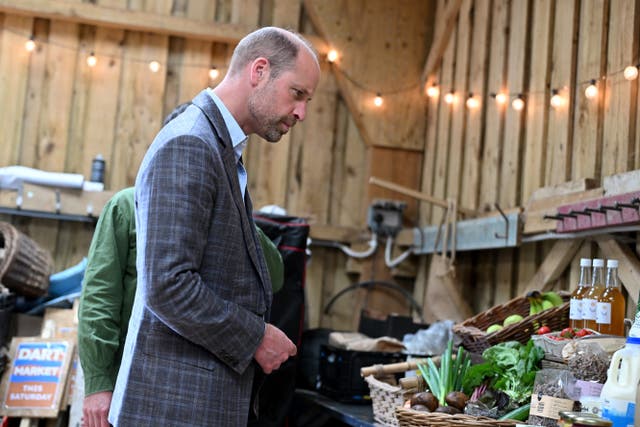
The centre’s food production combines farming methods such as agroforestry, permaculture, rotational grazing and crop rotation.
It is now carbon neutral and has increased biodiversity by 400% while achieving an annual turnover of £1.3 million.
The centre also focuses on nature-based therapies, supporting the mental, emotional and social wellbeing of children, young people, their families, and farming communities, as well as providing training courses, which extend to educational visits for primary and secondary school pupils.
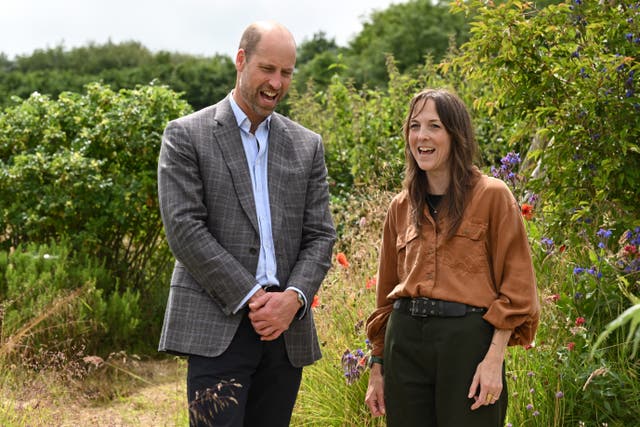
Rachel Phillips, managing director who led the visit, said: “We have young people that come out and see where their food grows.
“Quite often they’ll come through and eat all the berries, or they’ll go through and they’ll eat the cucumbers, or they’ll go and pick courgettes and then they’ll come back into the training centre and they’ll make something out of that, and then they’ll eat it.
“I think just having a positive experience with nature means that people are more likely to be interested as adults about where their food comes from or looking after the environment that they’re in.
“You’ve got to create those opportunities to have positive experiences.”
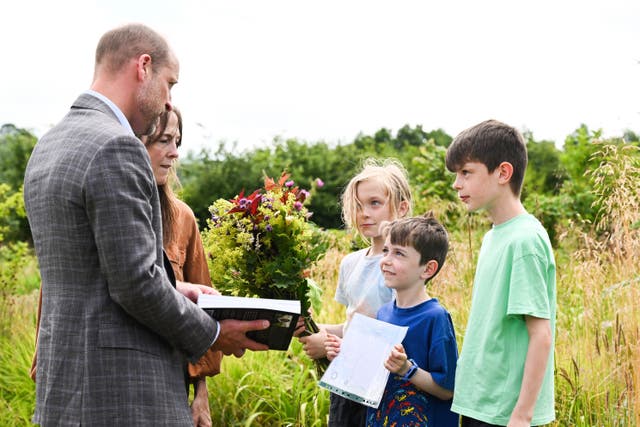
William’s visit highlighted his interest and objectives in the transition to net zero, in line with his Duchy of Cornwall’s target of becoming net zero across the estate by 2032.
Throughout the tour, he asked the team questions around the impact of climate change and extreme weather events on crop growth.
With its own curricula developed on site, the centre’s adult courses, partly government and partly philanthropically-funded and free to students, offer a natural approach to farming free of chemicals or fertilisers.
Student Madeleine Cocken, 33, from Totnes, said: “We have been learning today about the history of biodynamics and, literally right behind me, we are stirring some water, making a spray that we are going to be putting on the soil, which is part of biodynamics preparation, which is quite a spiritual way of farming, but there’s a lot of science backed behind it.”
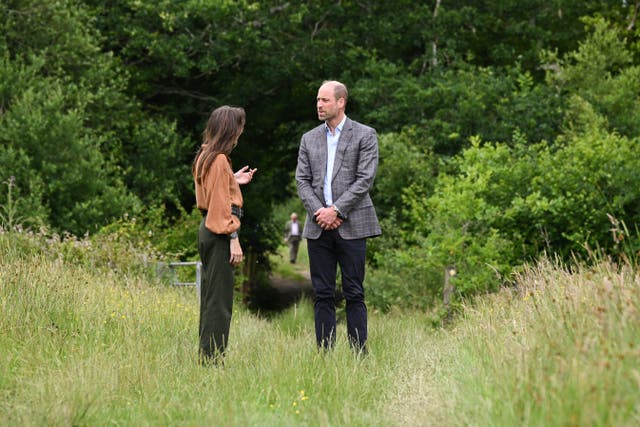
Along with a group of students of various ages and backgrounds, she is being taught methods currently unavailable in standard curricula.
“I don’t want it to be something that’s a privilege”, she added. “I want us to think about what we can grow in our climate and know where the food comes from. I think that’s a really special thing that I would like to learn about and then share my knowledge”.
New techniques are being tested among fruit and vegetable patches and flower meadows, such as pig grazing.
William was also shown the wellbeing garden, the final stop of the tour.
From thriving flower plants to a gazebo and waterfall, the garden, which featured in the RHS Chelsea Flower Show 2025 as an award-winning garden for Bowel Research UK, offers a haven for younger children to connect with nature and biodiversity.