The Climate Change Committee set out targets for Government to invest in air conditioning, flood defences and water efficiency to protect Britons.
The Government must set maximum temperature rules for workplaces and roll out air conditioning in hospitals and care homes to protect Britons against worsening climate change, advisers have urged.
Ministers should even consider changing the school year so pupils are not forced to sit important national exams in summer heat, when they may not have been able to sleep properly and are “absolutely not at their best”, the Climate Change Committee’s (CCC) Baroness Brown said.
The committee warns that worsening extremes of heat, flooding and drought are threatening the British way of life, from lives and livelihoods to the NHS, “gently changing seasons”, children’s football games, music festivals and weekend visits to National Trust venues.

Successive governments have not done enough to help the country adapt to the changing climate, a new report from the committee said, as it set out a series of solutions and targets for mid-century to hold the line against the threats.
And while efforts to cut climate emissions have become politically polarised, Baroness Brown said high numbers of voters across all parties thought the UK was unprepared for the changing climate, and “we might hopefully avoid that really extreme political division” when it comes to adaptation.
The CCC estimates that investing to protect the UK from climate change will cost around £11 billion a year of public and private money up to 2050.
But the advisers said climate change impacts were already costing up to £60 billion a year in flood damages, crop losses, excess deaths, decreases in productivity, and disruption to transport and health services, with that figure set to rise to as much as £260 billion a year by 2050.
Baroness Brown said the impacts of climate change are “not only eroding our cliffs, but also undermining the fundamentals of our health system, our insurance sector, our children’s schooling, and our food security”.
She added: “In an increasingly unstable world, being well adapted to climate change, being resilient to the changing climate and the changing weather that we’re seeing, is fundamental to delivering the food security, the energy security, and the economic security that we need to survive in this unstable world.”
More money needs to be spent on flood defences, while building in flood plains should be avoided unless risks can be reduced, farmers should be allowed to build onsite reservoirs to store water and councils should look after street trees effectively to provide city shading.
Air conditioning will become a key part of keeping people cool in heatwaves, in private homes as well as public buildings, and the Government needs to run public information campaigns telling people what steps they can take – such as closing blinds and curtains in the daytime to keep out the heat.
Dr Richard Millar, from the committee, said there was “unequivocal evidence that climate change is making extreme weather here in the UK, such as heatwaves, heavy rainfall, and the conditions for drought, more likely”.

The world has already warmed by 1.4C as a result of human activities such as burning fossil fuels, and on current trajectories will be 2C above pre-industrial levels by 2050 – with a “real risk” of hitting 4C heating by 2100 under worst-case scenarios, he said.
Without action to help people adapt, the increasing risk of heatwaves in the 40Cs by mid-century could lead to as many as 10,000 excess deaths a year, the committee said.
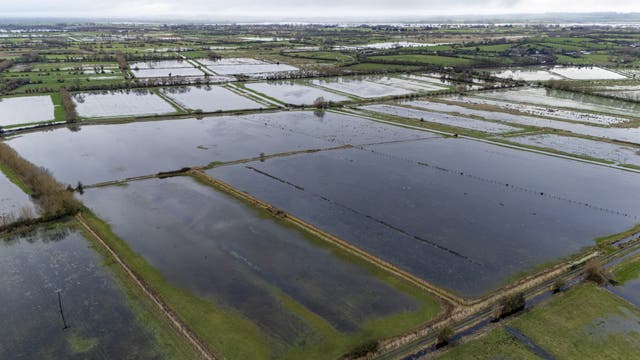
By 2050, heavy rainfall could become more intense, sea levels could rise 20-45cm and peak river flows could nearly double, raising the risk of flooding, it said.
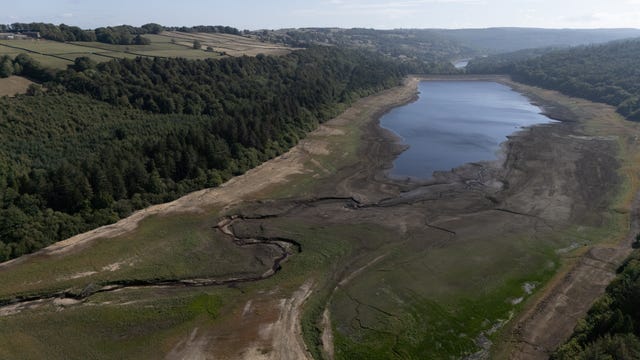
But the changing climate could also make drought very common, with water shortages of up to five billion litres a day, the committee added.
“We are facing a potential world where in 2050 you could turn the tap on and nothing would come out,” Baroness Brown, who is chairwoman of the CCC’s Adaptation Committee, said.
The committee is urging the Government to set targets to ensure there are no more heat deaths by 2050 than today, no more homes are at risk of flooding, and that by 2040, water supplies should be resilient to a one-in-500-year drought.
Solutions include:
– Setting workplace maximum temperature regulations, to protect workers from excess heat and encourage companies to install cooling measures.
– Ensure cooling measures are installed in hospitals and care homes by 2035 and schools by 2050, ranging from shading through to air conditioning.
– Support for vulnerable people to install cooling technology, including heat pumps that can provide both warmth in the winter and cooling in the summer.
– Investing more in flood defence programmes, with annual spend rising to £1.6 billion-£2.2 billion across the UK to pay for both “natural” and hard defence schemes.
– Ensuring new homes are not built in undefended areas at risk of existing or future flooding and coastal erosion.
New homes should also be built to be water efficient, there should be water efficiency standards for appliances, and data centres should be built where they will not add to a region’s drought risk, the report advises.
Measures are also needed to help nature adapt to the changing climate, with the committee calling for the Government to ensure 30% of land is protected for nature by 2030 – and for that all to be in good condition by 2050.
And there should be targets for domestic food production to be maintained at 60% of all food consumed, with help for farmers such as making it easier to store water on farms for use in dry conditions, the committee said.
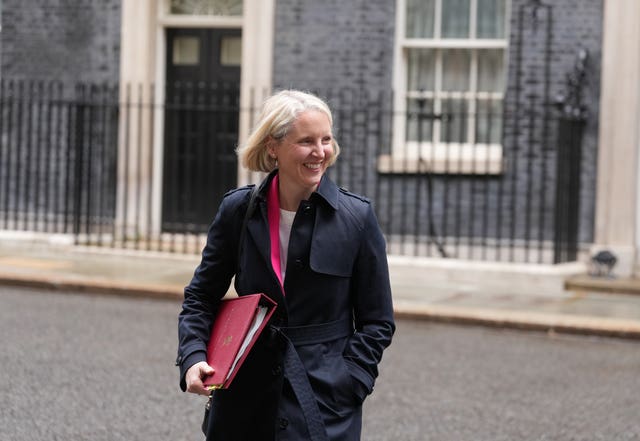
Environment Secretary Emma Reynolds, whose department Defra leads on climate adaptation, said: “We are acting to protect people and places from the impacts of climate change that are already being felt across the UK – from flooding to extreme heat and drought.
“We have already invested a record £2.65 billion to repair and build flood defences, protecting tens of thousands of homes and businesses, and have deployed the largest nature-friendly farming budget in history to support sustainable food production and security.
“Robust, independent science is essential and we will carefully consider the Climate Change Committee’s latest recommendations to drive further action.”