The Foreign Secretary has responded after US secretary of state Marco Rubio questioned the need for naval escorts ‘if no-one’s shooting’.
Yvette Cooper defended the UK and France’s proposed mission to secure the Strait of Hormuz once the Iran war ends after Marco Rubio called the plan a “catch-22″.
The Foreign Secretary said the initiative has been “discussed many times with the US” and was part of an effort to offer support to vessels in the key global shipping lane, over which Tehran maintains its chokehold.
It comes after the US secretary of state questioned the need for naval escorts “if no-one’s shooting”, but acknowledged it could provide initial reassurance to shipping.
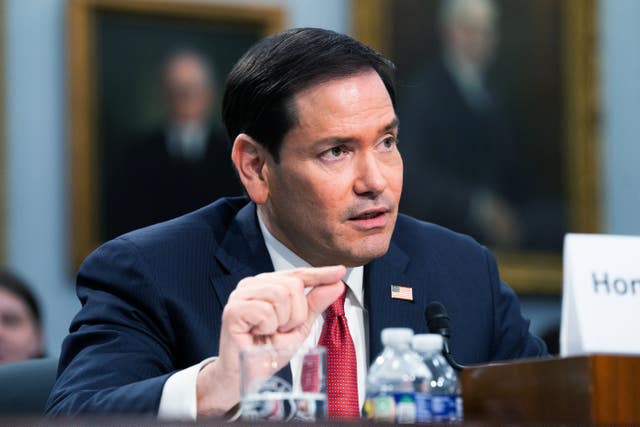
“They’ve put together this initiative, which they say they will send mine sweepers and escort ships, but they will do so once hostilities are ended. Kind of a catch-22,” the top diplomat told Congress earlier.
Asked whether that was a fair characterisation, the Foreign Secretary told the Press Association: “I think the issue is that we want it not to be needed, but we are preparing and ensuring that we have the maritime capability ready.
“So what we want is to have a ceasefire in place, to have all the mines removed by Iran and also to have safe passage and international shipping to get back to normal.
“But the reason for drawing together the maritime mission, which we’ve discussed many times with the US and also with 50 countries across the world, is to ensure we have additional demining capability wherever it might be needed, and also to have the support there to be able to provide escorts for shipping or reassurance for shipping if it is needed.
“The most important thing is to get that international agreement in place so that international shipping can return to normal without needing any further measures in place. But in order to get there, we need to show we’ve got the maritime support.”
The narrow Gulf channel has become a flashpoint in the conflict, now in its fourth month, with the US military saying on Tuesday evening it had launched strikes on an Iranian ground control station on an island near the strait.
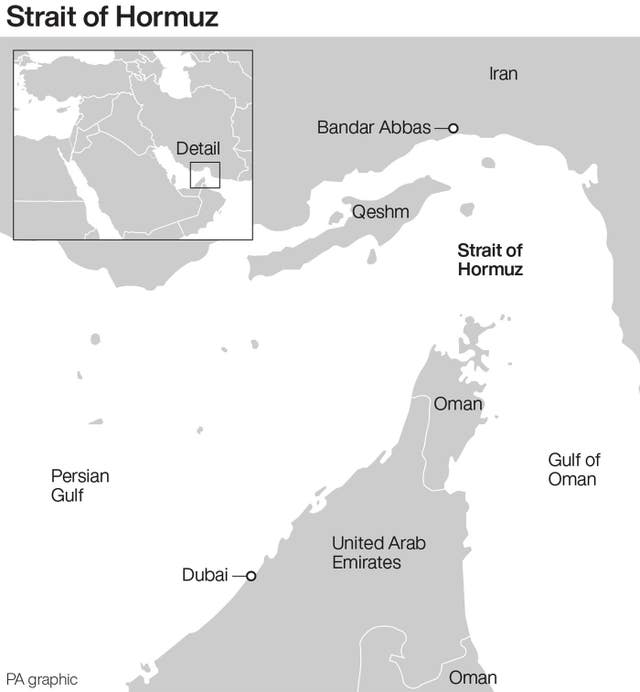
US Central Command said it had struck the site on Qeshm Island, home to a desalination plant, in response to Iranian missiles fired at Kuwait and Bahrain.
The US said two missiles fired at Kuwait had fallen apart en route, while those targeting Bahrain were shot down.
The vital supply route for oil and gas was open to shipping prior to the US and Israel launching strikes against Iran in February.
Iran’s stranglehold on the strait has shocked economies around the world, including the UK’s, and seen a spike in petrol prices.
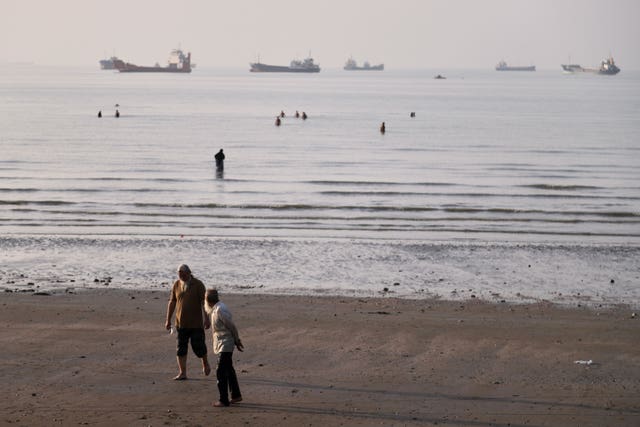
It has led the US to impose its own blockade resulting in an ongoing stand-off and leaving around 1,500 cargo vessels stranded, amid a fragile ceasefire, which has been shaken by ongoing strikes.
Appearing before the Senate foreign affairs committee, Mr Rubio said the US had not offered to ease sanctions against Iran in exchange for reopening the strait, which he stressed was a key demand as part of any deal.
Washington has argued Europe needed the sea route “much more than we do” and ensuring free transit of vessels was “much more their fight than ours”.
Plans being led by Britain and France to protect shipping in the channel once hostilities end have also fuelled US criticism of allies’ response to the conflict, with Mr Rubio himself previously arguing “it doesn’t make sense”.
The proposed future defensive mission would see the UK deploy autonomous mine-hunting equipment, anti-drone systems and Typhoon jets, alongside the destroyer HMS Dragon.
Speaking in Congress, Mr Rubio said freeing up the strait was set to top the agenda at the upcoming G7 summit.
“On the one hand, I mean, why do you need naval escorts if no-one’s shooting at the ships? That said, I don’t diminish the utility of it, because I would imagine the first few ships to go through are going to like to be escorted. So, I think that’s going to be a key feature of that conversation,” he said.