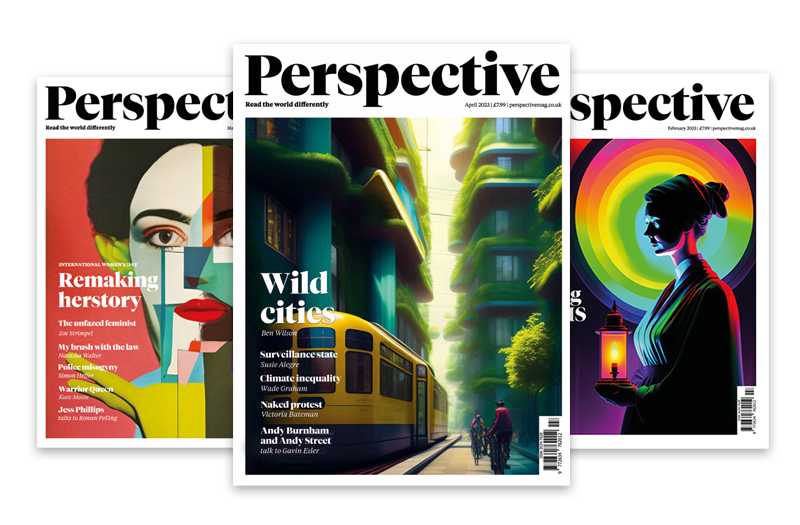
This issue of Perspective looks at lessons from history – what key lesson has shaped your scholarship?
That there is no such thing as an unbiased account. For my first two books, Cleopatra and Heroes, I drew a lot from Plutarch’s Lives, and I love the way he’ll write “Some people say this… but others believe that…” The significance of an event shifts, depending on the narrator’s viewpoint. No single source can ever tell the whole truth.
Your new book is The Scapegoat: The Brilliant Brief Life of the Duke of Buckingham. What drew you to George Villiers?
He had beauty and converted that into influence, then enormous wealth. So he was a man who lived a woman’s life. But because he was male, he could make the next move – gaining actual power in a way no 17th-century royal mistress ever did. He lived in an excitingly transitional time. The mindsets of the Middle Ages and the Enlightenment jostled each other. People were still terrified of witches, but Buckingham’s mentor was Francis Bacon, the great advocate of scientific empiricism. His story allowed me to write about politics and art and sex and dancing and warfare and garden design and ropes of pearls and the rise of the print media and the great tussle between royal absolutism and the law. I don’t want to compartmentalise the historical past. I try to see it whole.
How would you describe the age-gap love between James VI and I and Buckingham?
It was doubly unequal: one so much more powerful, the other so much more attractive. James was God’s representative on earth (he thought), but 26 years older and odd-looking. Buckingham was the fourth son of an obscure country gentleman, but dazzlingly beautiful. James was head over heels in love. In his letters he addresses Buckingham as “my sweet child and wife”. Buckingham responds affectionately. Both men were married, with children. They shared a bed frequently. What did they do there? We can’t be sure, but their relationship was certainly extremely intimate.
Being a monarch’s “favourite’ is notoriously dicey. Was it Buckingham’s making, or downfall?
Both. Under James he was the king’s right-hand man. When Charles I succeeded, he ran the country. But all that success provoked envy and then rage. He was blamed for all the nation’s ills, and eventually murdered by a man who thought him the “grievance of grievances”.
How did Buckingham fare as Lord High Admiral?
He was energetic and competent. The grandees who had trailed him before the king as a piece of sexual bait were nonplussed to find he wasn’t just a pretty puppet. It was only when he went to war that things went badly wrong.
Did the C17 court of James VI and I mark the first British epoch of gender fluidity?
Puritan pamphleteers thought so. They railed against “he-women” and “she-men”. Interestingly, it wasn’t King James’s sexual orientation that bothered them so much as his pacifism. He preserved the peace for quarter of century, saving England from the horrors of the Thirty Years War. Instead of thanking him, his subjects called him a coward. Real men, they thought, like a fight.
What most surprised you, researching the book?
The splendour of the language. Politicians, preachers, diarists, muck-raking journalists all speak and write in magnificent sentences. Many could hold forth for hours on end.
You wrote an acclaimed biography of Cleopatra, who was also famed for her allure. Can beauty have political heft?
In Buckingham’s lifetime, public opinion, for the first time in British history, was beginning to make itself heard. So yes – charm, charisma, a persuasive way with words, all those things mattered, as they do in modern democracies. And at the Jacobean court appearances counted because the masques in which the monarchy was dramatised and celebrated were so central to the culture, and Buckingham was a brilliant dancer. It was said he could caper in mid-air like a young goat.
Which politician do you most admire?
King James is my current favourite. Because he was rude and funny and vulnerable. Because he wrote privately to the Pope pointing out to His Holiness that they worshipped the same God, so why did their people have to keep killing each other? (The Pope never replied.) Because he commissioned the King James Bible, far away the most influential literary project the British monarchy ever sponsored, and the reason why reggae song lyrics are so gorgeous.
You also wrote The Pike, a biography of the Italian poet and proto-fascist, Gabriele D’Annunzio.
D’Annunzio fascinates me because he combined a refined intelligence with a terrifying zest for violence. He was a romantic. He loved art and flowers and beautiful ancient cities, but his political rhetoric is appalling. He was also exceptionally good at picking up on cultural trends. Writing about him, I was writing about the origins of fascism and indirectly about modern populism.
Your novel Peculiar Ground covers four centuries of English life on a fictional country estate, Wychwood. Did you have a real-life model?
I grew up on an estate like that, where my father worked as agent. It was a magical place to be a child, and it became a lost domain for me because my father left that job when I was seventeen. Conjuring it up in fiction was a way of reclaiming it with a more critical consciousness.
I was writing the novel during the migration crisis of 2015. A great house surrounded by a walled park seemed like a good setting in which to explore ideas about exclusion and containment and privilege, whether during the plague year of 1665 or after the fall of the Berlin wall in 1989, or in the world around us now.
Lucy Hughes-Hallett won the Samuel Johnson Prize, Costa Book Award and Duff Cooper Prize in 2013 for The Pike. The Scapegoat (Fourth Estate) will be published in October